Shikshana Mahiti — September 2024 (Part 2)
September 1, 2024
Announcement
UGC has requested all the HEIs for the implementation of guidelines and curriculum framework for environmental education at the undergraduate level
National News
AICTE launches ‘Juniper AI-Driven Campus’ Centre of Excellence for 500 Institutions in India


ACU launches inaugural Higher Education Taskforce Report that outlines the themes that will shape the future of global higher education.
Edu-Prism
Government Schools in Karnataka: Challenges and Progress
Government schools in Karnataka play an important role in the educational landscape, especially for students from rural and marginalized communities. These schools serve millions of children and are vital to the state's educational initiatives. Over the years, the Karnataka government has enacted numerous policies and programs to enhance access, quality, and infrastructure in these institutions. However, challenges such as high dropout rates, infrastructure deficiencies, and the digital divide still need to be addressed. This article explores the status of government schools in Karnataka, focusing on enrolment trends, infrastructure, teacher availability, and other critical factors based on the UDISE+ 2021-22 report.
In the academic year 2021-22, Karnataka had approximately 12.09 million students enrolled in its government schools(UDISE_Report_2021_22). Enrollment figures are relatively balanced between boys and girls, with only minor differences observed across primary and secondary levels. Government schools are particularly vital in rural areas, accounting for a substantial portion of student enrollment. However, disparities persist between urban and rural access to education. The state’s focus on equitable access is illustrated by the Gross Enrollment Ratios (GER): an impressive 104.8% at the primary level and 94.7% at the upper primary level (UDISE_Report_2021_22). The 104.8% GER signifies that the number of students enrolled in primary schools exceeds the population of children aged 6 to 10 years, indicating successful efforts to include all children in education, even those outside the typical age range.
Infrastructure in government schools presents a mixed picture. According to the UDISE+ 2021-22 report, 99.8% of government schools have access to electricity, 98.9% have drinking water, and 97.4% have functional toilets. These statistics reflect the state's commitment to improving the physical conditions of schools, particularly in rural regions. However, there remains a stark digital divide — only 33.91% of schools have internet access, highlighting the urgent need for enhanced digital infrastructure, particularly in the post-pandemic educational environment.
The availability and quality of teachers are crucial for educational success. Karnataka has a pupil- teacher ratio (PTR) of 26:1 at the primary level, which is close to the national average. However, rural areas face persistent teacher shortages, impacting the quality of education. The dropout rate at the secondary level, currently at 12.61%, indicates challenges in retention and quality, with many students leaving school before completing their education. In terms of teacher training, the state has implemented programs to equip educators with skills for modern classrooms. However, traditional teaching methods, such as rote learning, are still prevalent. The emphasis on conceptual understanding, as advocated by the National Education Policy (NEP) 2020, has not yet fully permeated many schools.
The digital divide is one of the most pressing challenges faced by Karnataka’s government schools. The COVID-19 pandemic highlighted this gap, as many students lacked access to digital devices and reliable internet connections. Initiatives such as Diksha, an e-learning platform, and Vidya Vahini aim to bridge this divide, but access remains uneven, especially in rural areas. Efforts to incorporate technology into classrooms have been slow, with a minority of schools equipped with necessary digital resources.
Despite these challenges, there are notable success stories. Some government schools have excelled in areas such as STEM education, sports, and cultural activities, demonstrating that quality education is attainable with the right resources and leadership. Schools that have adopted the Nali-Kali initiative have reported increased student engagement and improved learning outcomes.
Recommendations and Way Forward
• Strengthen teacher training to foster modern pedagogies and facilitate technology integration.
• Enhance infrastructure in rural schools, especially regarding digital facilities.
• Increase community involvement to ensure accountability and improve school management.
• Explore public-private partnerships to improve resource allocation and foster innovation in government schools.
Karnataka’s government schools have made commendable progress in improving access and infrastructure. However, challenges such as high dropout rates, learning outcomes, and the digital divide persist. Continued investment in education, especially in rural areas, along with a focus on teacher training and digital integration, can help government schools play a transformative role in shaping the future of Karnataka’s youth.
Mr. Darshan Bevoor
Intern, CESS
MBA, 3rd Semester
KSRDPR University, Gadag
Karnataka News
KDA urges Karnataka government to implement 5% reservation in education for Kannadigas living in border regions and outside the State

Uniform entrance test to be held for private quota seats at private universities from 2025, Said M C Sudhakar.
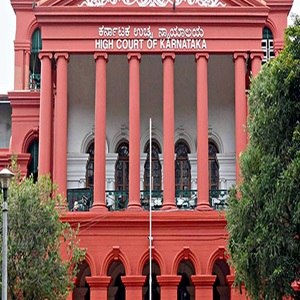
Karnataka HC asks education department to comply with UGC norms

Minister for School Education and Literacy Madhu Bangarappa has said that the State government will initiate the recruitment process to fill 5,000 vacant posts of teachers in Kalyana Karnataka region.
Voices on Education
Jai Mohan Pandit writes: India’s higher education system needs to level up. A third pillar of experts can help

Centre for Educational and
Social Studies
The Centre for Educational and Social Studies (CESS) is a registered society established in 2006. Since its inception CESS has been working in the field of education. CESS, guided by its vision of bringing about ‘Social Transformation Through and With Education’ is striving to draw the attention of stakeholders, including State and Central Government, on vital issues of education. We at CESS engage in Research, Policy Advocacy and Capacity Building in the broad sphere of Education. In the recent past, since the unveiling of NEP, CESS has conducted over 100 webinars and stakeholders consultations on policy awareness and on policy implementation and has reached out to more than 30,000 stakeholders of education. CESS has launched ‘NEP Ready’-a capacity building training workshops to facilitate HEIs in the effective implementation of NEP 2020.
Disclaimer: This document is being presented to you for your information. The information and opinions in the news articles contained in Shikshana Mahithi are captured from the government websites and authors of the articles. CESS is a not-for-profit organization and does not endorse the presented news.