Shikshana Mahiti — October 2024
October 1, 2024
Announcement
CBSE has issued guidelines for activities/schemes for setting up election clubs and democracy rooms in schools.
The Ministry of Youth Affairs and Sports (MYAS) has released the draft National Sports Policy (NSP) 2024 for public consultation.
UGC invites comments/suggestions/feedback on the Draft University Grants Commission 'Guidelines on Apprenticeship Embedded Degree Programme (AEDP)'
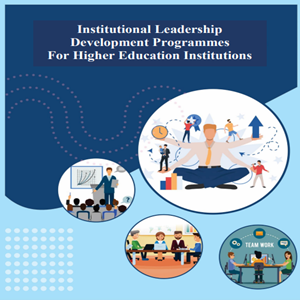
UGC has released Draft Guidelines for Institutional Leadership Development Programmes for Higher Education Institutions.
National News
UGC has announced the introduction of the "PhD Excellence Citation" an annual award aimed at recognising outstanding doctoral research across various disciplines.

UGC has issued a circular urging Higher Educational Institutions (HEIs) to integrate voter education and electoral literacy into their curricula formally.
AICTE collaborates with AVPL to launch AeroVision Drone labs across technical institutions
RBI Announces Scholarship Scheme for Faculty Members from Academic Institutions
ACER India has developed a tool for classroom observation that enables schools to make informed decisions about teachers’ professional development.
AICTE in partnership with the 1M1B Green Skills Academy has announced "green" internships for all its affiliated Colleges and Universities
AICTE has directed all higher education institutions to adopt the AICTE model curriculum for the Bachelor of Business Administration (BBA) programme.

UGC has issued a notification inviting Higher Educational Institutions (HEIs) to participate in the Data Innovation Lab initiative launched by the Ministry of Statistics and Programme Implementation (MoSPI).
Edu-Prism
Pedagogical Approaches: Experiential Learning vs. Standardized Teaching
In India, Education and Shikshan differ philosophically, culturally and pedagogically. Education focuses on academic knowledge, while Shikshan encompasses holistic learning and integrates intellectual, emotional, moral and social growth. Derived from the Sanskrit “Shiksha,” meaning “to teach”, Shikshan goes beyond the academic and emphasizes character education, ethics and cultural heritage.
Holistic development, a core principle of Shikshan, integrates intellectual, emotional, moral and social growth, and promotes the advancement of the whole person. Educators can promote resilience and well-being by addressing mental health, promoting emotional intelligence and encouraging interdisciplinary learning and critical thinking. Mindfulness, self-reflection and project-based learning combining humanities and STEM (Science, Technology, Engineering, Arts, and Mathematics), promote creative problem-solving, empathy and a deeper understanding of complex problems.
Cultural Rootedness, a core principle of Shikshan, emphasizes learning in cultural contexts to promote identity, belonging and heritage. In today's diverse and globalized world, this approach is crucial. Educators can help students connect personal stories to broader cultural landscapes by integrating local stories, cultural narratives and diverse traditions into curricula. Promoting diversity, equity and inclusion initiatives promotes empathy, breaks stereotypes and celebrates cultural richness. Culturally responsive teaching practices, such as contextualized lessons and inclusive language, create safe spaces for students to explore and express their cultural identities. Integrating folk tales, oral traditions and indigenous knowledge into the curriculum promotes cultural appreciation and nuance.
Experiential learning, a cornerstone of Shikshan, emphasizes practical experience and application over memorization. Aligned with the National Education Policy (NEP) 2020, this approach focuses on vocational training, skills development, and hands-on learning. Project-based learning, problem-solving, STEM education and practical skills training prepare students for emerging industries. Community-based learning and service projects promote social responsibility and empathy. The recommendations of the NEP 2020, such as integrating vocational education from Class 6 and promoting apprenticeships and internships, align with Shikshan's emphasis on experiential learning.
In Shikshan, the mentor-disciple relationship is a sacred bond that promotes growth, guidance, and empathy between the Guru (Teacher) and Shishya (Student). This timeless principle remains essential today and is reflected in the emphasis on teacher training and student-centred learning in the National Education Policy (NEP) 2020. Modern mentoring programs, coaching, personalized learning, and adaptive assessments allow teachers to tailor instruction to individual needs. Shikshan's, the Beyond Classroom Walls principle recognizes that learning extends to community interactions and everyday life. This is more relevant today with online/blended learning, community engagement, service-learning projects, and the integration of technology and real-world applications. NEP 2020’s focus on experiential learning, vocational training, and community engagement reinforces this.
Shikshan's timeless principles inspire contemporary educational innovations. STEAM education promotes creative problem-solving, social-emotional learning promotes empathy and self-awareness and sustainable learning emphasizes environmental responsibility. The integration of indigenous knowledge systems supports cultural diversity and inclusivity. These approaches provide a comprehensive framework that addresses the needs of the whole student and prepares them for success in a complex, interconnected world.
Learning and standardized teaching emphasize the importance of balance in teaching. Standardized instruction ensures uniformity and consistency, while experiential learning promotes critical thinking, creativity and emotional intelligence. Drawing from Shikshan, an ancient Indian educational philosophy, educators can integrate valuable insights into holistic education, emphasizing holistic development, cultural rootedness, experiential learning, mentor-student relationships, and learning beyond classroom boundaries.
To conclude, Indian tradition values education as a lifelong process aimed at nurturing one's entire being. Shikshana in Indian tradition was not limited to knowledge acquisition but extended to spiritual and moral development, emphasizing the importance of balance between intellectual and ethical growth. The worldwide legacy of this antiquated system continues to influence contemporary educational approaches.
Dr. Kavitha P N
Research Associate, CESS
Karnataka News
KEA to hold Karnataka NEET UG 2024 mop-up round due to the addition of 100 medical seats in KIMS Bangalore

No grace marks for SSLC from this year, says Karnataka Education Minister Madhu Bangarappa
Gururaj Karajagi to lead panel to improve education scenario in Kalyana Karnataka.

VTU Transforms Engineering Education in Karnataka with Reconfigurable Instrumentation from Liquid Instruments.
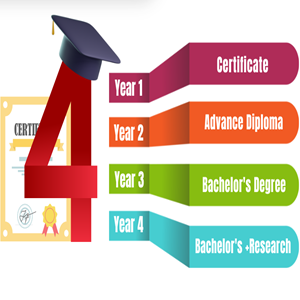
Only 23 out of 900 Bengaluru colleges have the option to provide 4th-year UG Courses
The Karnataka Government has decided not to conduct board examinations for students of classes 5, 8, 9, and 11 in schools affiliated with the State Board, adhering to a Supreme Court directive.
Karnataka launches AI-powered digital assistant for teachers.


The Karnataka Examination Authority has proposed Aadhaar-linked registration for all examinations.
Voices on Education
Amman Madan writes: Indian knowledge system in school education.


Deepto Banerjee writes: How does the US education system differ from India’s?
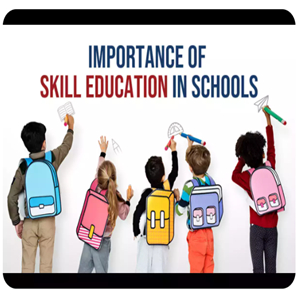
Prof Saklani, Director, NCERT; Prof Indrani Bhaduri, CEO and Head, PARAKH, NCERT write: Templating skills in School Education.

Khushboo Awasthi, Vinay R Sanjivi write: Is it time to amend the Right to Education Act?
Centre for Educational and
Social Studies
The Centre for Educational and Social Studies (CESS) is a registered society established in 2006. Since its inception CESS has been working in the field of education. CESS, guided by its vision of bringing about ‘Social Transformation Through and With Education’ is striving to draw the attention of stakeholders, including State and Central Government, on vital issues of education. We at CESS engage in Research, Policy Advocacy and Capacity Building in the broad sphere of Education. In the recent past, since the unveiling of NEP, CESS has conducted over 100 webinars and stakeholders consultations on policy awareness and on policy implementation and has reached out to more than 30,000 stakeholders of education. CESS has launched ‘NEP Ready’-a capacity building training workshops to facilitate HEIs in the effective implementation of NEP 2020.
Disclaimer: This document is being presented to you for your information. The information and opinions in the news articles contained in Shikshana Mahithi are captured from the government websites and authors of the articles. CESS is a not-for-profit organization and does not endorse the presented news.