Shikshana Mahiti — November 2024
November 1, 2024
Announcement
UGC has released guidelines for “Ph.D. Excellence Citation”.
UGC has decided to add "Ayurvedic Biology" as a subject in the UGC-National Eligibility Test.
UGC has urged all the HEIs to create supportive mechanism for students to pursue two academic programmes simultaneously and comply with the guidelines of UGC on the same.
National News
The Union Cabinet has approved PM Vidyalaxmi, a new Central Sector scheme that seeks to provide financial support to meritorious students so that financial constraints do not prevent anyone from pursuing higher studies.
The All-India Council for Technical Education (AICTE) has introduced changes to the approval process for BBA-BCA courses, categorising them as 'technical'.
The UGC is Planning to allow students to complete three-year degree courses in two and a half years and four-year degrees in three years starting the next academic year (2025-26).
India needs 2,500 universities to accommodate 50% of students: NITI Aayog CEO.
Prof. M. Jagadesh Kumar, Chairman of the UGC has outlined a dynamic roadmap to revolutionize India’s Higher Education landscape.
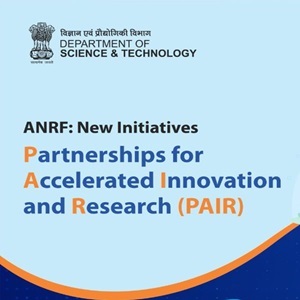
The Centre has launched the Partnerships for Accelerated Innovation and Research (PAIR) programme, designed to elevate research capabilities in higher education institutions (HEIs) across India.
The UGC has issued another reminder to higher education institutions or HEIs to implement guidelines to facilitate students to pursue 2 courses simultaneously.


Shri Dharmendra Pradhan unveils The Teacher App - leveraging innovation and technology for continuous capacity building of teachers in the spirit of NEP 2020.
The Union Cabinet has approved One Nation One Subscription, a new Central Sector Scheme for providing country-wide access to scholarly research articles and journal publication.
AICTE Allows 20% Faculty At Technical Institutes To Be Persons From Industry.
Edu-Prism
The Higher Education Entrance Conundrum
For an average Indian college student who has just finished his 12th standard board exam, another Herculean challenge beckons: competitive exam entrance tests. The current higher education landscape is littered with a multitude of entrance exams like the JEE (Mains and Advanced) for Engineering, NEET for Medical sciences, CUET for Central University Courses, State-specific CETs for various professional courses, and Institution-specific exams like the BITSAT, VITEEE, among others. With such multiple high-stakes exams governing access to some of the most prestigious institutions in the country, the higher education entrance system has turned into a labyrinth that students must navigate to secure a promising future.
While this may not seem worrying at first, there are serious issues in the higher education system's underbelly. First, there is an enormous academic burden on the student as a test-taker. He has to simultaneously prepare for the boards and the entrance tests, often with different syllabi and test patterns. Needless to say, this would also entail significant expenditure on preparation resources, multiple application fees and other concomitant costs like travel, to take the exams in different cities. This inadvertently creates barriers for talented students from disadvantaged backgrounds. The financial implications aside, the situation is such that the system indirectly shapes the career choice of millions of students based on exam performance rather than individual preference or aptitude. As a direct consequence, we will now have a generation of qualified professionals who lack the vigour and enthusiasm to drive innovation in their chosen fields, after being shepherded into “prestigious” courses based on examination metrics in their formative years.
Second, there is a need to address the elephant in the room: Coaching centres. If numbers were any indication, India's entrance exam coaching industry has ballooned into a staggering ₹58,000 crore behemoth(Indian Express, June 20, 2024). Not only has it created a parallel education system, operating alongside formal schools, but it has also created a fear psychosis among the student community that enrolling in these coaching centres is mandatory to clear competitive exams. With the sole aim of maximizing results, most centres focus on providing “tips and tricks” to solve problems and encourage rote learning to tackle “standard questions”, while relegating critical thinking and conceptual clarity to the background. Instances abound where such coaching centres pay monetary inducements to exam toppers for fake testimonials.
Third, and perhaps most importantly, the undue focus on entrance exam preparation has impacted the quality of school and collegiate education itself. Regular school curricula comprising laboratory and practical work are ignored to allocate more time for competitive exams. This has a deleterious effect on problem-solving, stifles intellectual curiosity and hinders the holistic development of students.
Such a malaise in higher education needs comprehensive reform. We could begin with standardized examination schedules and an entrance examination system that evaluates core knowledge, aptitude, and stream-specific skills. Specific caps on tuition fees of Coaching Centres may also be instituted. Importantly, there needs to be a tally between the school curriculum and the entrance exam syllabus. In our assessment framework, we need to factor in not just academic performance but also extracurricular achievements, practical skills, aptitude and interests, and project work. These reforms must make our system more practicable and humane to identify and nurture diverse talents.
After all, our responsibility lies in preparing the next generation of innovators and leaders, not simply creating excellent test-takers.
A B Medappa
Research Associate, CEED (A Unit of CESS)
Karnataka News
Australian curriculum to be introduced in 10 Indian schools.

No grace marks for SSLC from this year, says Karnataka Education minister.
The Karnataka government is still getting requests to start English-medium sections.

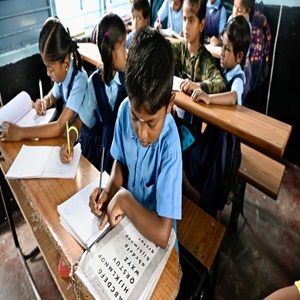
Karnataka makes NOC mandatory for starting new colleges, increasing seats.
Voices on Education
R P Gupta writes: Reforming India’s education system for job market alignment.
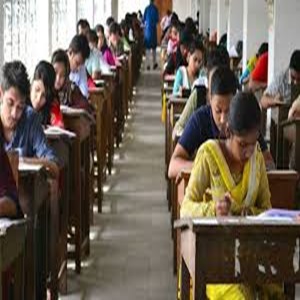

Mahit Anand writes: Bridging sports and education: Exploring the nexus between India’s National Sports Policy 2024 and National Education Policy 2020.
Shruthi Bansal writes: Inclusion in education: Why India needs public-private partnerships.

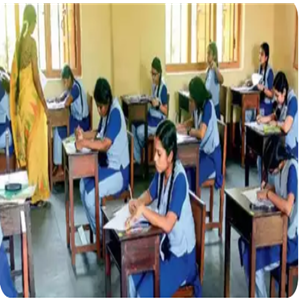
ToI Education: Bridging the Learning Gap: Should CBSE prioritise competence-based assessment over Score-based Evaluation.
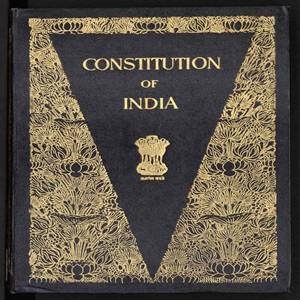
Mamidala Jagadesh Kumar writes: How constitutional values guide our educational policy
Centre for Educational and
Social Studies
The Centre for Educational and Social Studies (CESS) is a registered society established in 2006. Since its inception CESS has been working in the field of education. CESS, guided by its vision of bringing about ‘Social Transformation Through and With Education’ is striving to draw the attention of stakeholders, including State and Central Government, on vital issues of education. We at CESS engage in Research, Policy Advocacy and Capacity Building in the broad sphere of Education. In the recent past, since the unveiling of NEP, CESS has conducted over 100 webinars and stakeholders consultations on policy awareness and on policy implementation and has reached out to more than 30,000 stakeholders of education. CESS has launched ‘NEP Ready’-a capacity building training workshops to facilitate HEIs in the effective implementation of NEP 2020.
Disclaimer: This document is being presented to you for your information. The information and opinions in the news articles contained in Shikshana Mahithi are captured from the government websites and authors of the articles. CESS is a not-for-profit organization and does not endorse the presented news.