Shikshana Mahiti — May 2025 (Part 2)
May 1, 2025
Announcement
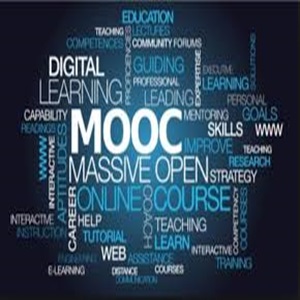
UGC invites Expression of Interest (EoL) from eligible faculty members of Higher Education Institutions (HEIs) for the development of Massive Open Online Courses (MOOCs) in various disciplines to be offered on the self-paced platform.
National News
Union Education Minister Dharmendra Pradhan on noted that it is important to take steps to impart education in students' mother tongues till Class VIII.
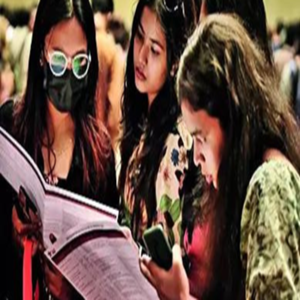
India's push to become a global education hub is gathering momentum, with five foreign universities receiving Letters of Intent (LoIs) to establish campuses in the country.
India set to introduce western Australian curriculum in 100 schools across nation

In collaboration with the India AI Mission under the Government of India, Microsoft has pledged to equip five lakh individuals including students, educators, developers, government officials and women entrepreneurs with AI skills by 2026.
Edu-Prism
The Malur Karaga Festival: A Living Celebration of Draupadi’s Divine Power
Every spring, the town of Malur in Karnataka’s Kolar district transforms into a vibrant hub of spiritual energy and ancient tradition. The Malur Karaga Festival, one of the region’s most unique and powerful cultural events, honors Draupadi, the legendary heroine of the Mahabharata. She is celebrated not merely as a mythological figure, but as a fierce goddess, a protector of justice, and a potent symbol of feminine power.
The festival's roots lie deep in the Mahabharata, drawing inspiration from the dramatic moment when Draupadi takes a solemn vow after being dishonored in the Kaurava court: she will not tie her hair until her humiliation is avenged. Lord Krishna protects her honor, and later, when Bhima fulfills his vow on the battlefield, Draupadi transforms into a fierce goddess, akin to Kali. She roams the battlefield in wrath before finding peace by entering fire at dawn. This intense, divine episode forms the spiritual backbone of the Karaga, infusing the festival with profound themes of justice, retribution, and ultimate serenity.
At the heart of the Malur Karaga is a striking ritual: a male priest, known as the Karaga bearer, dresses as Draupadi. Clad in a saree, bangles, and feminine jewelry, he carries a Karaga (sacred pot) on his head, adorned with jasmine flowers and long garlands symbolizing Draupadi’s unbound hair. He becomes a vessel for her divine presence, leading a captivating nighttime procession through the streets. Surrounded by music, chants, and rituals, he doesn’t merely represent Draupadi—he becomes her. This transformation is both deeply spiritual and symbolically bold, offering a fascinating commentary on gender and divinity. While a man undertakes this central role, women play a vital part in the festival’s success. They meticulously prepare offerings, craft the Arathi Deepa from rice and jaggery, and observe strict fasting, thereby upholding the sanctity of the rituals and preserving Draupadi’s divine essence. This dynamic interplay of gender roles, both challenging and reinforcing traditional norms, adds layers of complexity to the festival's rich symbolism.
For the Vahnikula Kshatriya community, Draupadi is more than a legendary queen—she is their kuladevata (family deity). In Malur, her story isn't distant mythology but a living source of values like justice, resilience, and devotion. Every ritual in the Karaga is infused with her presence, constantly reminding devotees of her strength and unwavering dharma. The epicenter of these celebrations is the Dharmaraya Temple, believed to be over 250 years old. Historical inscriptions from 1685 speak of land grants and the revival of the area by local rulers, who invited artisan communities and organized markets that continue to thrive today. The temple has evolved over centuries, symbolizing spiritual continuity and cultural pride, and remains a central gathering place during the Karaga.
The festival culminates in a powerful climax during the Karaga day, when the bearer enters a pit of fire—a symbolic reenactment of Draupadi’s return to divine peace after her wrath. As dawn breaks, the bearer returns to the temple, signifying renewal and calm after chaos. This entire event is accompanied by Veerakumaras (devotee-warriors), drums, trumpets, and a sea of devotees, all united by devotion, energy, and centuries-old tradition. The Karaga isn't just performed; it's profoundly lived.
While Karaga festivals are celebrated across Karnataka, Malur’s stands out for its strict scriptural observance and strong community ties. Rooted in agrarian and matriarchal folk traditions, it honors not just Draupadi but elemental forces like earth and water, celebrating the Shakti (divine feminine energy) that sustains life and justice. The Malur Karaga Festival is a living tradition, a symbol of resilience, and a profound celebration of feminine strength. Draupadi’s enduring presence transforms Malur into a sacred landscape where myth, devotion, and identity converge. In today’s world, where ancient values and modern challenges intersect, this festival powerfully reminds us that the divine feminine—strong, just, and fearless still walks among us.
Chetan N
Intern, CESS
Student, Centre for Women’s Studies
Bangalore University
Karnataka News
Karnataka Government ordered the appointment of 51,000 guest teachers for primary and high schools across the state for the academic year 2025-26.
Voice on Eductaion

Sandeep Munjal writes: The changing role of faculty: From gurus to mentors and innovation catalysts
Srinath Sridharan writes: Broken schools, broken future: Why India needs an Education regulator.

Centre for Educational and
Social Studies
The Centre for Educational and Social Studies (CESS) is a registered society established in 2006. Since its inception CESS has been working in the field of education. CESS, guided by its vision of bringing about ‘Social Transformation Through and With Education’ is striving to draw the attention of stakeholders, including State and Central Government, on vital issues of education. We at CESS engage in Research, Policy Advocacy and Capacity Building in the broad sphere of Education. In the recent past, since the unveiling of NEP, CESS has conducted over 100 webinars and stakeholders consultations on policy awareness and on policy implementation and has reached out to more than 30,000 stakeholders of education. CESS has launched ‘NEP Ready’-a capacity building training workshops to facilitate HEIs in the effective implementation of NEP 2020.
Disclaimer: This document is being presented to you for your information. The information and opinions in the news articles contained in Shikshana Mahithi are captured from the government websites and authors of the articles. CESS is a not-for-profit organization and does not endorse the presented news.