Shikshana Mahiti — March 2025
March 1, 2025
Announcement
UGC has formulated the "UGC Guidelines on Apprenticeship Embedded Degree Programme (AEDP), 2025" and all higher educational institutions are requested to take necessary steps.
UGC has released Guidelines for Implementation of Recognition of Prior Learning in Higher Education.
UGC has requested for the incorporation of Indian Knowledge Systems (IKS) in Higher Education Curricula.
Niti Aayog’s releases report on Expanding Quality Higher Education through States and State Public Universities.
National News
PM’s Scheme for Mentoring Young Authors (PM-YUVA 3.0) launched to promote reading, writing and book culture.
UGC has received more than 15,000 suggestions on its draft regulations for the appointment and promotion of teachers and academic staff in universities and colleges.
AICTE announces Rs 4 crore to educational institutions to promote Indian languages under VAANI.
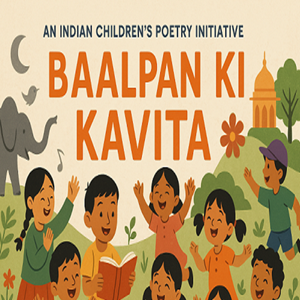
Ministry of Education launches "Baalpan ki Kavita initiative: Restoring Bhartiya rhymes/poems for young children"
Union Education Minister Dharmendra Pradhan reaffirmed that the National Education Policy (NEP) does not impose any language and emphasized the need for education to be global while staying rooted in India.
NCTE plans to phase out 4-year B.El.Ed programme by 2026.

India hosts over 80 German universities to strengthen academic and research ties Read more:
Edu-Prism
Trend Analysis of Education Budget Allocation and Expenditure (2015–2025):
Assessing the Implications Before and After the Implementation of NEP 2020
India’s education budget allocation has seen significant shifts over the past decade, especially following the implementation of the National Education Policy (NEP) 2020. From 2015 to 2025, the education sector has witnessed both financial growth and fluctuations, reflecting the government’s commitment to improving educational access, quality, and infrastructure. Before NEP 2020, budget allocations primarily followed traditional patterns, focusing on infrastructure development, teacher recruitment, and curriculum implementation. The government increased its emphasis on skill development, digital education, and research initiatives. This shift is evident in the increased allocations for higher education, reaching ₹47,620 crores in 2024.
The data suggests that the allocated budget for school education increased from ₹42,219 crores in 2015 to ₹78,572 crores in 2025. Meanwhile, the budget for higher education followed a similar trend, rising from ₹26,855 crores in 2015 to ₹50,078 crores in 2025. Despite these increases, expenditure trends reveal that actual spending sometimes lagged behind allocation, especially during the pandemic years. For instance, while ₹59,845 crores were allocated for school education in 2020, only ₹51,842 crores were spent, indicating a gap in fund utilization.
Enrollment trends after NEP 2020 suggest a positive impact, particularly in secondary and higher education. The GER for higher education increased significantly from 27.4% in 2020 to 39.7% in 2024, reflecting improved access and participation. Secondary education enrollment also witnessed a jump, reaching 72.3% in 2024. However, primary education enrollment remained largely unchanged, hovering around 100%, with only minor variations. This suggests that while NEP-driven policies have successfully enhanced higher education accessibility, primary education reforms have had limited impact on enrollment growth because it is largely influenced by the pandemic conditions faced by the country.
A statistical analysis using t-tests indicates that the impact of NEP 2020 on education enrollment varies across different levels. The results show no significant difference in primary education enrollment before and after NEP, likely due to existing near-universal enrollment. However, secondary and higher education enrollment rates increased significantly post-NEP, confirming the effectiveness of policy-driven initiatives such as flexible learning pathways, scholarships, and digital education reforms.
Despite these improvements, certain challenges persist. The allocation for the University Grants Commission (UGC) saw a sharp decline of 61% in the 2024-25 budget, signaling a potential shift away from traditional higher education funding models. Additionally, while overall education funding has increased, India’s education expenditure remains below the global benchmark of 6% of GDP, fluctuating between 2.8% and 2.9% since 2015 and it varies between 3.25% and 4.36% of GDP in 2022. Moreover, resource utilization efficiency remains a concern, as some allocated funds remain underutilized due to administrative bottlenecks.
To optimize future budget allocations, several policy recommendations can be considered. First, a shift toward outcome-based budgeting can ensure that funds are linked to measurable improvements in literacy and enrollment rates. Strengthening financial oversight mechanisms will also help minimize underutilization and inefficiencies. Increased investment in teacher training and digital infrastructure is necessary to sustain the progress made post-NEP. Additionally, targeted funding for underserved regions and marginalized communities can help bridge existing educational disparities.
Overall, while India’s education budget has expanded over the years, the real challenge lies in efficient implementation and strategic allocation of resources. The findings indicate that NEP 2020 has contributed positively to secondary and higher education enrollment, yet primary education reforms require further attention. Moving forward, a balanced approach—combining increased financial commitments with effective policy execution—will be essential to realizing the long-term goals of NEP 2020 and achieving equitable, high-quality education for all.
Karthika K
Intern, CESS
2nd Semester, MA Applied Economics,
PSGR Krishnammal College for Women, Coimbatore.
Karnataka News
The state govt will implement artificial intelligence (AI) and technology-driven teaching methods in 5,000 govt schools to enhance learning outcomes.

The government allays concerns over the closure of nine out of 10 new universities in Karnataka by stating that any decision will be taken only after thorough consultations and keeping in mind the need to improve the quality of higher education.
Karnataka is set to reintroduce sexuality education in schools from the 2025–26 academic year.

School education and literacy minister Madhu Bangarappa has said that the admission age for Grade 1 in the state will be decided based on the recommendation of the State Education Policy (SEP).
Voices on Education
Sandeepa Sahay writes: The annual allocation to education by the central government, covering both schools and higher education, saw an increase of 12.8 per cent over last year’s revised estimates.

Arpan Tulsyan writes: Skill education in schools: How the implementation of NEP 2020 is paving the way.
Shishir Jaipuria writes: Fostering innovation and entrepreneurship in higher education: Strategies for supporting student startups.


Prof. Ranjan Bose, Director, IIIT – Delhi writes: Leveraging AI in higher education institutions - What India should do differently?
Suman Bhattacharjea and others write: Reflections on how the New Education Policy plays out in the classroom.
Centre for Educational and
Social Studies
The Centre for Educational and Social Studies (CESS) is a registered society established in 2006. Since its inception CESS has been working in the field of education. CESS, guided by its vision of bringing about ‘Social Transformation Through and With Education’ is striving to draw the attention of stakeholders, including State and Central Government, on vital issues of education. We at CESS engage in Research, Policy Advocacy and Capacity Building in the broad sphere of Education. In the recent past, since the unveiling of NEP, CESS has conducted over 100 webinars and stakeholders consultations on policy awareness and on policy implementation and has reached out to more than 30,000 stakeholders of education. CESS has launched ‘NEP Ready’-a capacity building training workshops to facilitate HEIs in the effective implementation of NEP 2020.
Disclaimer: This document is being presented to you for your information. The information and opinions in the news articles contained in Shikshana Mahithi are captured from the government websites and authors of the articles. CESS is a not-for-profit organization and does not endorse the presented news.