Shikshana Mahiti — March 2024
March 1, 2024
Announcements
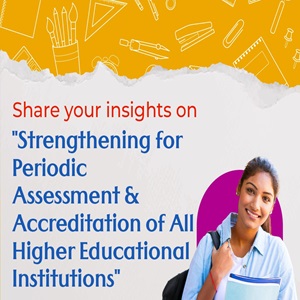
UGC has released the Overarching Committee Report for “Transformative Reforms for Strengthening Assessment and Accreditation of HEIs in India”.
Ministry of Education has notified e-Gazette on “Accessibility Guidelines and Standards for HEIs and Universities” and has asked the heads of HEIs to take necessary action to implement the same.

UGC has asked the students to take precautions before enrolling in Programmes offered under Open &Distance Learning (ODL) and/or Online Learning {OL) mode.
UGC has decided that from the academic session 2024-25. The NET - score can be used for admission 1o Ph.D. programmes in place of entrance tests conducted by the different universities/HEIs.

AICTE has asked the heads of its affiliated institutions to design the question papers in bilingual languages – one language must be local language in order to promote Technical Education in Indian languages.
National News
Union Minister of Education and Skill Development & Entrepreneurship, Shri Dharmendra Pradhan, launched various initiatives in School and Teacher Education, developed by the Department of School Education & Literacy (DoSEL), Ministry of Education.
The UGC has mandated universities to provide bridge and online courses to facilitate the transition to four-year undergraduate programmes, offering students flexibility in higher education.
The Department of School Education and Literacy (DoSEL), Ministry of Education, Government of India, is set to conduct the Foundational Literacy and Numeracy Assessment Test (FLNAT) as part of the ULLAS - Nav Bharat Saaksharta Karyakram on 17th March 2024, across 23 states.
The Ministry of Minority Affairs approved multiple projects for the development of cultural and religious studies across several Indian universities.
The ministry of education is planning to put in place a comprehensive campaign aimed at identifying the root causes of drop out rates and implementing measures to mitigate them.
The 200 varsities, including 46 Central universities, 36 State universities, 20 Deemed, 105 Private Universities and six Government Institutions, have registered to utilise CUET-UG scores for admission into their undergraduate programmes.
The NCERT is set to release the revised Central Board of Secondary Education (CBSE) Syllabus for Grade III and VI in keeping with the recently introduced NCF-SE 2023.
Edu-Prism
Whither Education in India
Education is the foundation for growth and development of an individual at the micro level and of a nation at the macro level. Imparting education is possible through a formal or informal means. Education one gets in one’s early days in the family is primarily informal in nature, the one that is taught in institutions like schools, colleges and Universities becomes the formal channel. While the focus of formal education is cognitive in nature with the objective of providing domain knowledge, hard skills that required to be successful in finding and performing a vocation/profession, the focus of informal education is on soft skills, moulding one’s personality, inculcating values, attitudes with the objective of making an individual to be a human being and a responsible citizen in the society.
In ancient India as well as during precolonial period education as practiced in the form of gurukuls was by and large informal in nature focusing on the holistic development of each incumbent of the gurukul. The academic environment that prevailed in gurukul catered to moulding one’s personality as well as in providing training based on the strength of each individual to pursue one’s vocation.
The onset of British Rule in India brought a paradigm shift in education. Schools and colleges were established with a predetermined curriculum with a set of pedagogical and assessment methods. Education became a mass program simultaneously catering to hundreds of students in a formal classroom environment. This education facilitated one to be eligible for jobs that the British administration created.
Industrial revolution added a new dimension namely mechanisation. Technical and engineering education became a new stream that attracted the Indian youth to equip themselves with skills in working with machines. Science and Engineering education became the priority and the supportive measures by the Governments resulted in proliferation of Institutions offering Engineering and Science education
Despite the relevant curriculum and the effective teaching and training, the major concerns of the employers as reported by them is that they are not employable. Unfortunately students are equipped with hard skills to perform and excel on the job but are found to be lacking in essential human skills like communication, interpersonal skills etc. Further, the materialistic values that has been promoted by the western culture is influencing the educational institutions towards practice of unhealthy practice of overemphasising on academic performance and excellence with little importance to the holistic development of students.
Today Education across all levels is curriculum and performance oriented that makes both the teachers and the students to develop a formal approach to learning. Technology entering into the classroom teaching has resulted in distance between teachers and students. Some Students are found to depend on Available online resources for their academic requirements thereby neglecting the happenings in the classroom. Opportunities for peer learning, informal interactions between teachers and students are being less in the recent times.
The result of these changes is found to have negative effects on the development of youth population. Though academic performance should be one of primary objective of higher education, overlooking the holistic development of the students by transforming a young adolescent into a responsible citizen of the country will be detrimental to the growth of the nation. Several behavioural problems of the students at the higher educational level like academic anxiety, stress, suicidal tendencies, addiction problems, apathetic attitude towards morality and ethics, etc are to be addressed by institutions of higher education. There is an urgent need to bring in an informal environment into the educational institutions. Apart from the discipline-based curriculum, courses related to upskilling the students in soft skills, sensitizing students to one’s culture, mechanisms for inculcating values, ethics and morality are to be introduced. Lessons from the alternative educational systems like Gurukul, Integration education model, and many others related to their pedagogy, best practices, etc could be initial steps that could be taken towards achieving the two dimensions of learning namely acquisition of knowledge and the desired modification in one’s behaviour.
Prof. H S Ashok
Honorary Professor, CESS
Karnataka News
The government is planning to convert all degree colleges into professional colleges for imparting job-oriented courses, Minister for Higher Education M C Sudhakar has said.


Karnataka government revises school textbooks for new academic year.
The Karnataka High Court has nullified the state's school education department’s notification to conduct board exams for class 5, 8 & 9 citing violations of the Continuous and Comprehensive Evaluation model mandated by the Right To Education Act (RTE) 2009.
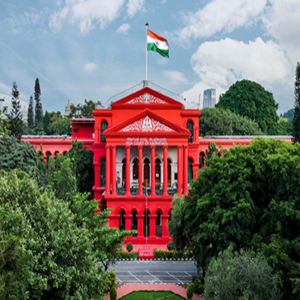
The state government’s delay in implementing the State Education Policy (SEP) has affected the affiliation process of colleges at the universities, as the Department of Collegiate Education has not opened the portal for the same.
Following the guidelines of National Commission for Minority Educational Institutions of Higher Education, Karnataka withdraws condition of minimum number of students for tag of religious minority institution.
Voices on Education
Raghav Aggarwal writes: Holistic Progress Card: How NCERT is planning to change student assessment.
Kirti Sharma writes: How the higher education sector can help in overcoming unemployability?


Sachin Sandhir writes: Integrating happiness and well-being into education through initiatives like the Happiness Curriculum and UNICEF's Life Skills Framework is essential for fostering holistic development and resilience among students.
Thouseef Madikeri writes: Preschool education has long been overlooked, with Anganwadis suffering from staffing and infrastructure deficiencies. Access to preschool facilities is predominantly limited to private schools, hindering equitable access across society.

Centre for Educational and
Social Studies
The Centre for Educational and Social Studies (CESS) is a registered society established in 2006. Since its inception CESS has been working in the field of education. CESS, guided by its vision of bringing about ‘Social Transformation Through and With Education’ is striving to draw the attention of stakeholders, including State and Central Government, on vital issues of education. We at CESS engage in Research, Policy Advocacy and Capacity Building in the broad sphere of Education. In the recent past, since the unveiling of NEP, CESS has conducted over 100 webinars and stakeholders consultations on policy awareness and on policy implementation and has reached out to more than 30,000 stakeholders of education. CESS has launched ‘NEP Ready’-a capacity building training workshops to facilitate HEIs in the effective implementation of NEP 2020.
Disclaimer: This document is being presented to you for your information. The information and opinions in the news articles contained in Shikshana Mahithi are captured from the government websites and authors of the articles. CESS is a not-for-profit organization and does not endorse the presented news.