Shikshana Mahiti — June 2025 (Part 2)
June 1, 2025
National News
The Directorate of Education (DoE) of GNCT, Delhi has directed all concerned authorities to implement the minimum age requirement of 6 years for admission to Class 1 starting from the academic year 2026-27 in accordance with the provisions of NEP 2020 and RTE Act, 2009.
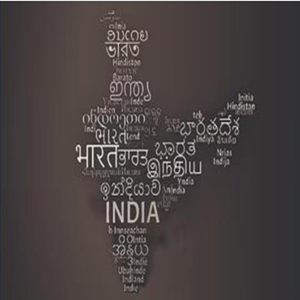
Twenty-two Indian languages, classified under Phase I and Phase II of the Indian Language Initiative, have now been integrated into the academic framework of universities, with 750 books in 22 languages being added to the curriculum.
The decision of Central Board of Secondary Education (CBSE) to conduct Class 10 board exams twice a year from 2026 has received a mixed, but largely thoughtful response from school principals.

Edu-Prism
Social Media as a Classroom: How Women Are Learning and Teaching Online
In recent years, social media has emerged as a powerful alternative to traditional education, especially for women seeking to learn, grow, and share knowledge beyond formal institutions. Once dismissed as mere entertainment or networking platforms, social media spaces now host vibrant, informal classrooms where learning is driven not by institutional syllabi but by lived experiences, curiosity, and the desire for self-improvement. For women, especially those who have been historically underrepresented in formal educational opportunities, these digital platforms provide an empowering avenue for skill-building, community learning, and feminist advocacy, sparking a new wave of hope and inspiration in the field of education.
Platforms such as YouTube, Instagram, LinkedIn, and even TikTok (where permitted) have become dynamic educational arenas. Women creators and educators offer tutorials and lessons on a wide range of topics, including financial literacy, mental health, coding, and cooking. These are not one-size-fits-all lessons but tailored, accessible, and often free resources designed to meet women where they are at home, at work, or in transit. Many of these educators speak directly to the realities women face: balancing caregiving responsibilities, managing limited time, and navigating gender-specific challenges in their careers.
For example, a young mother in Bengaluru may follow Instagram reels that offer quick productivity hacks or mindfulness exercises while a graduate student in Delhi might learn Python from a woman-led YouTube channel. These platforms enable users to learn at their own pace and convenience, breaking away from traditional classroom formats and hierarchical learning structures. Bite-sized learning on Instagram or long-form tutorials on YouTube enables a broad spectrum of engagement, each click, share, and comment becomes a step in the broader process of digital knowledge exchange.
Social media is also a space where feminist ideas are taught, challenged, and reimagined. From issues of body autonomy and reproductive rights to workplace equity and intersectional feminism, women-led pages and campaigns have sparked vital conversations. Hashtags such as #MeToo and #EverydaySexism have turned isolated experiences into collective dialogues. These are not abstract debates but lived testimonies of discrimination, resistance, and solidarity, offering both awareness and advocacy. Importantly, many of these educators do not claim to be experts in the traditional sense. Their authority comes from lived experience and community trust. Feminist knowledge is no longer confined to academia or NGOs, it is being built and shared in real-time by women, for women.
Despite its transformative potential, social media learning is not without barriers. Women continue to face digital threats such as cyberbullying, harassment, and privacy violations are real and pervasive. Many hesitate to share or even engage with content for fear of backlash or surveillance. Additionally, the digital divide continues to exclude women from rural or economically marginalized communities who lack access to devices, stable internet, or digital literacy. These issues are further compounded for women from marginalized castes, communities, or regions who face intersectional disadvantages.
To harness the full power of social media as a learning space, it is essential to foster safe, inclusive, and supportive digital environments. Gender-sensitive digital literacy programs are key. These should not only teach women how to use technology but also how to use it critically—how to evaluate information, protect their privacy, and navigate digital spaces with confidence. Equally important are mentorship networks and peer learning communities that foster trust, encourage collaboration, and amplify the voices of marginalized individuals.
Educational institutions, NGOs, governments, and private companies must work together to support women's digital participation. This means investing in infrastructure to improve access, especially in underserved areas, and ensuring that social media platforms design safer user experiences. Reporting tools must be more robust, moderation more sensitive to context, and policies more attuned to gendered online violence. Only through collective action can we ensure a safer and more inclusive digital space for all.
Sharen Thumboo
Research Fellow, Naveen Jindal Young Global Fellowship
OP Jindal Global University
Karnataka News
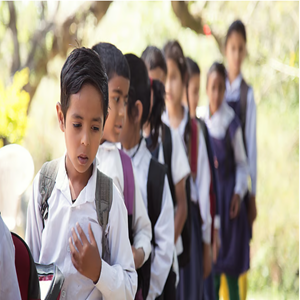
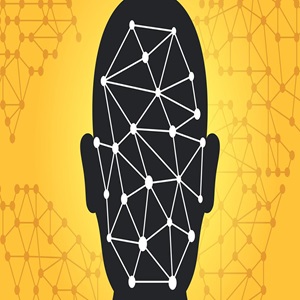
The Karnataka School Education and Literacy Department has issued an order that from this academic year, all government and aided schools in the state will have a mobile-based artificial intelligence (AI)-based facial recognition attendance system.
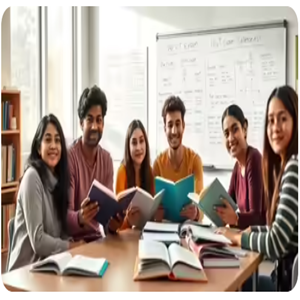
The Karnataka government is introducing an industry-ready apprenticeship-related degree to encourage women entrepreneurs.
The Department of school education and literacy, Karnataka has entered into an MoU with US-based Khan Academy to offer online learning resources to children of classes 6-II PU.
Voices on Education
Gurucharan Gollerkeri writes India’s moment to lead learning in Global South
Dr. Baljinder Kour and Dr. Balinder Singh write: From Vedas To NEP 2020: The Revival Of Indian Knowledge Traditions.
Centre for Educational and
Social Studies
The Centre for Educational and Social Studies (CESS) is a registered society established in 2006. Since its inception CESS has been working in the field of education. CESS, guided by its vision of bringing about ‘Social Transformation Through and With Education’ is striving to draw the attention of stakeholders, including State and Central Government, on vital issues of education. We at CESS engage in Research, Policy Advocacy and Capacity Building in the broad sphere of Education. In the recent past, since the unveiling of NEP, CESS has conducted over 100 webinars and stakeholders consultations on policy awareness and on policy implementation and has reached out to more than 30,000 stakeholders of education. CESS has launched ‘NEP Ready’-a capacity building training workshops to facilitate HEIs in the effective implementation of NEP 2020.
Disclaimer: This document is being presented to you for your information. The information and opinions in the news articles contained in Shikshana Mahithi are captured from the government websites and authors of the articles. CESS is a not-for-profit organization and does not endorse the presented news.