Shikshana Mahiti — June 2024
June 1, 2024
Announcements
UGC has released Guidelines on Public self-Disclosure by Higher Education Institutions, 2024.
UGC has released the Curriculum and Credit Framework for Postgraduate Programmes.
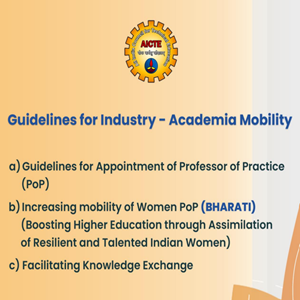
AICTE has released guidelines for Industry-Academia Mobility.
National News
Ministry of Education issues advisory to States/UTs to ensure RTE entitlements and nutritional support under PM-Poshan to Children with Special Needs.


Department of School Education signs MoU with the National Book Trust under Department of Higher Education to develop an institutional framework for Rashtriya e-Pustakalaya.
A committee set up by the education ministry will examine the issue of "grace" marks awarded to some 1,600 students who appeared for the NEET-UG medical entrance examination. Read more at:

University Grants Commission (UGC) has decided to allow higher education institutions (HEIs) in India to admit students twice a year beginning from the 2024-25 academic session.
The Ministry of Education has initiated the implementation 11-digit unique identification number for students, known as the Permanent Education Number (PEN), starting from the current academic year.

CBSE launches NEP 2020-aligned online capacity building programmes for educators.
Edu-Prism
The role of Learning Infrastructure in Enhancing Quality of Education
Education in India is at the crossroads and stands as a basic right bestowed to everyone that enables individuals and communities to develop holistically. Education today has become is critical for eliminating poverty and inequality by equipping skills among the students for better employment and economic autonomy which will eventually boost national growth. While secondary education serves as a link between basic and higher education, it addresses problems such as poverty and limited infrastructure, particularly in developing countries. Initiatives of UNESCO seek to address the existing gaps in the education eco-system. In our country, increased enrolment is countered by high dropout rates over the years due to various reasons. The government is dealing with projects such as RMSA, Digital India and Samagra Shiksha Abhiyan which aim to improve infrastructure, integrating technology and ensure inclusive quality education for all.
Learning infrastructure in school education
In the realm of education, learning infrastructure refers to both physical facilities and institutional elements that enable successful learning. Physical facilities include classrooms, teaching aids, libraries, laboratories, playgrounds, and even basic requirements such as clean drinking water, sanitation, reliable electricity, Health and hygiene. Well-maintained and appropriately planned environments may have a greater influence on student concentration, convenience, and overall learning experience. Institutional elements include syllabus, educational resources, technological advancement, training for teachers, and even administrative processes. Effective learning infrastructure ensures that these components work together effortlessly to provide a high-quality education.
The learning infrastructure is still lacking in government schools of India after several initiatives. the fact that just 65% of schools have electricity supply, 28% have computers, and 11% have connectivity to the internet (UDISE 2020–21). Lack of access to basic amenities, such as clean drinking water and separate working toilet for students, is a common problem, particularly in rural regions where dropout rates are high and academic performance is low. Programs like the Samagra Shiksha Abhiyan aim to improve infrastructure, but execution varies widely, with significant disparities between urban and rural schools. Therefore, more equitable resource allocation is crucial to ensure a favourable learning environment for all students.
Witnessing the above deficiencies few studies are carried out to understand the physical challenges and based on the studies it was seen that government schools often lack proper buildings, with many building structures insufficient or poorly maintained, hindering a conducive learning environment. Library resources exist but are underutilized due to the absence of dedicated spaces, depriving students of regular reading and research opportunities. While some schools have laboratory equipment, the lack of separate labs restricts hands-on learning essential for subjects like science, impacting critical thinking and problem-solving skills. Digital infrastructure is similarly deficient. Despite having computers, many schools lack internet access and uninterruptible power supply (UPS) systems, crucial for reliable digital learning. Additionally, there is a significant shortage of teachers trained in digital education, limiting the effectiveness of available technology. This shortfall impairs students' ability to learn digital skills essential in the modern world, underscoring the urgent need for enhanced infrastructure and trained staff to improve educational outcomes.
In a nutshell, blending physical and digital infrastructures into education enhances the learning experience while also preparing students for the demands of the modern world. It equips them with essential 21st-century abilities, improving their flexibility and competency in an increasingly digital and networked global society.
Ms Srija Dasyapu & Ms Gandam Kundanasri
Interns, CESS
Post Graduate students, Department of Public Administration
Central University of Karnataka.
Karnataka News
DC B. Susheela instructed teachers and officials of the Education Department to focus on providing quality education to students starting from the primary level itself.
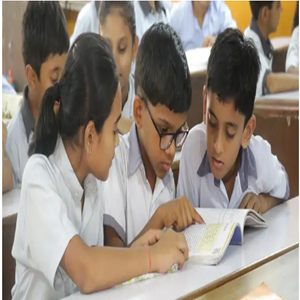
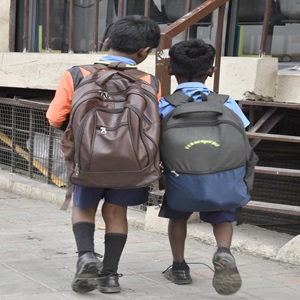
The State government has ordered all private schools, including State, Central, and other board curriculum, operating in Karnataka to register under the Right of Children to Free and Compulsory Education Act-2009.
Department of School Education and Literacy (DSEL) recently passed an order to start bilingual education – in English and Kannada.

Karnataka Higher Education dept launches paid internship degree programmes for 800 students
CBSE, ICSE schools in Karnataka now required to teach Kannada as first or second language.
Karnataka govt. to form expert committee to decide on the mode of providing pre-primary education at anganwadis.
Voices on Education

Radhika Desai writes: Public provisioning of early childhood education: Path to employment of women for higher economic growth.
Siddharth S Singh writes: How to reform higher academia for India's economic and technological development.

Abhinav Prakash writes: The NEP debate: Why criticism of the policy is premature and off the mark.
Centre for Educational and
Social Studies
The Centre for Educational and Social Studies (CESS) is a registered society established in 2006. Since its inception CESS has been working in the field of education. CESS, guided by its vision of bringing about ‘Social Transformation Through and With Education’ is striving to draw the attention of stakeholders, including State and Central Government, on vital issues of education. We at CESS engage in Research, Policy Advocacy and Capacity Building in the broad sphere of Education. In the recent past, since the unveiling of NEP, CESS has conducted over 100 webinars and stakeholders consultations on policy awareness and on policy implementation and has reached out to more than 30,000 stakeholders of education. CESS has launched ‘NEP Ready’-a capacity building training workshops to facilitate HEIs in the effective implementation of NEP 2020.
Disclaimer: This document is being presented to you for your information. The information and opinions in the news articles contained in Shikshana Mahithi are captured from the government websites and authors of the articles. CESS is a not-for-profit organization and does not endorse the presented news.