Shikshana Mahiti — July 2024 (Part 2)
July 1, 2024
National News
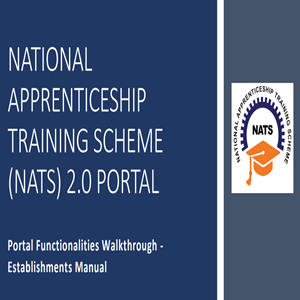
Union Minister for Education Shri Dharmendra Pradhan today in New Delhi launched the National Apprenticeship and Training Scheme 2.0 Portal
The Ministry of Education and the University Grants Commission (UGC) launched a project to develop 22,000 books in Indian languages in the next five years.
NAAC introduces major reforms in higher education accreditation
Convergence of efforts by Centre, states needed to improve education quality

Edu-Prism
Holistic Education in Ancient India: A Framework for Modern Educational Objectives
Education is a human need. A need that promotes one from a living being to a learned and realized one. Education in Ancient India did precisely the same. It focussed on the overall character, spiritual and intellectual development. The objective of education was to prepare a student not just for employment but for different facets of life.
Any education system must have objectives, methods, and principles that determine its success. The objective, in other words, the outcome is pre-determined. To bring about self-reliance, self-restraint, and self-respect in the student. Additionally, it lets the student realize the purpose of his life, delving more into the spiritual experience of life. While not being oblivious to other vital aspects of life.
The environment a student is taught determines the extent of the knowledge transmitted and retainment. In Ancient India, educational institutions were in the vicinity of nature. The education taught them not to exploit nature but rather embrace it. Sustainability is the cornerstone of ancient Indian Educational Institutions from Ashrams and Gurukuls to Universities. Education was residential that exposed students to the practical world.
The next step is the curriculum. Gurukuls, Ashrams, and Universities had multidisciplinary curriculums. Four Vedas, six Vedangas, Upanishads, Darshanas, Puranas, and Tarka Shastra. Shiksha, Chhandas, Vyakarana, Nirukta, Jyotisha, and Kalpa were the six Vedangas, while Nyaya, Baiseshika, Yoga, Vedanta, Sankhya, and Mimasa were the Darshanas. Grammar, algebra, geometry, art, and literature were significant as well. In universities like Nalanda, students had a reasonable exposure to all 5 Vidyas in their secondary education before they could choose their specializations.
The third and the key is how teaching and learning happened in Ancient India. The widely known methods are (1) Sravana (Listening), (2) Manana (Intellectual apprehension of truth), and (3) Nididhyasana (Realization). Kautily also mentions an 8-step process for the Vedic study. Conferences and debates happened often, exposing students to different opinions, and ideologies. Most importantly teaching them to be unbiased and exploratory. Storytelling was another means through which education was imparted.
Undoubtedly Ancient Indian education had a Holistic approach. Development in all five domains namely, physical, social, intellectual, emotional, and spiritual was significant.
Realization of knowledge was the aim, not memorization. Memorization was and is important but that alone does not define education. The relationship between the teacher and the student is what nourishes and escalates the whole process of education. The teacher was not just a guide but a critique as well as a well-wisher. Chores were an inevitable part of education. The guru would always observe students when an assignment or a chore was assigned. This made the education process personalized. Each student was assigned and taught in ways suitable for his ability.
Inspired by the methods, curriculum, and the essence of the Ancient Indian Education System a framework of educational objectives has been formulated. This framework has five main objectives namely, Cognitive, Affective, Psychomotor, spiritual, and Teacher-student relationship.
1. Cognitive Objectives - It is divided into two parts, One being knowledge acquisition, and Intellectual skills development.
2. Affective Objectives - It focuses on two things: emotional and ethical development. The ultimate objective is character building.
3. Psychomotor Objectives - deals with physical development and practical and vocational skills.
4. Spiritual Objectives - Focuses on fostering inner peace, mindfulness, and concentration along with encouraging exploration of different ideas.
5. Teacher-student relationship - Fostering a deep and friendly yet straightforward relationship between teacher and student.
There is so much to learn from the Ancient Indian Education system. The educational objectives put forward are an attempt. There are multiple ways through which the Ancient Indian education system can be perceived. This attempt was inspired by Ancient Indian Education acknowledging that there can be a more comprehensive and exquisite framework of educational objectives.
Spurthi P
Intern, CESS
3rd Semester, BBA, LL.B.(Hons)
School of Law, R V University, Bengaluru
Karnataka News
Door-to-door surveys launched in Karnataka to find out-of-school children.
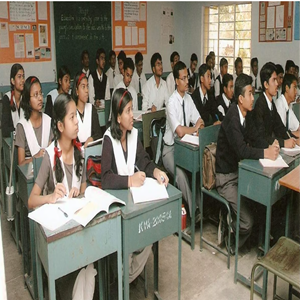
Karnataka Assembly Passes Resolution Against NEET, Proposes KCET For Medical Admissions.
In a bid to raise the bar for those seeking admission to postgraduate courses at state-run universities, the Karnataka State Higher Education Council (KSHEC) is proposing an entrance examination
Voices on Education
Apoorva Anand writes: How Indian institutions are setting new standards in global education.


Akshal Agarwal writes: Why metrics to measure education spending need to be redefined
Centre for Educational and
Social Studies
The Centre for Educational and Social Studies (CESS) is a registered society established in 2006. Since its inception CESS has been working in the field of education. CESS, guided by its vision of bringing about ‘Social Transformation Through and With Education’ is striving to draw the attention of stakeholders, including State and Central Government, on vital issues of education. We at CESS engage in Research, Policy Advocacy and Capacity Building in the broad sphere of Education. In the recent past, since the unveiling of NEP, CESS has conducted over 100 webinars and stakeholders consultations on policy awareness and on policy implementation and has reached out to more than 30,000 stakeholders of education. CESS has launched ‘NEP Ready’-a capacity building training workshops to facilitate HEIs in the effective implementation of NEP 2020.
Disclaimer: This document is being presented to you for your information. The information and opinions in the news articles contained in Shikshana Mahithi are captured from the government websites and authors of the articles. CESS is a not-for-profit organization and does not endorse the presented news.