Shikshana Mahiti — January 2025 (Part 2)
January 1, 2025
Announcements
CBSE has informed the Principals and Heads of the Institutions to implement the Automated Permanent Academic Account Registration (APAAR) ID system for students of CBSE affiliated schools.
National News
Shri Vineet Joshi assumes charge as Secretary, Department of Higher Education, Ministry of Education.
The National Council for Teachers Education (NCTE) is planning to restart the one-year Bachelor of Education (BEd) course this year after a decade-long hiatus, in line with National Education Policy (NEP) 2020 recommendations, said the council chairman Pankaj Arora.
Centre for Multidisciplinary Development Research (CMDR) in collaboration with Centre for Educational and Social Studies (CESS) is conducting a Two-Day Conclave on
"Transformation of Bharath: The Story of a Decade and Future Outlook"
on 27 & 28 March, 2025 at Dharwad.
Click on the link below to register
Form Link Register on/before March 24, 2025.
Registration is free.
Edu-Prism
The Impact of Education Expenditure on Economic Growth in India
Education plays a crucial role in shaping a country’s economic trajectory by fostering human capital development, innovation, and overall productivity. In India, where rapid economic growth and demographic shifts are creating new opportunities and challenges, understanding the impact of education expenditure on GDP is vital. This article explores the relationship between government spending on education and economic growth in India from 2000 to 2022, based on empirical analysis.
Economic theory suggests that investment in education enhances labour productivity, increases innovation, and contributes to sustainable growth. Countries that allocate higher public funds to education often experience higher GDP growth, as a well-educated workforce is better equipped to adapt to technological advancements and contribute to economic progress. The United Nations’ Sustainable Development Goals (SDG 4) emphasize the importance of quality education, reinforcing the notion that human capital investment is key to long-term development.
Over the past two decades, India’s expenditure on education has increased significantly. However, as a percentage of GDP, it has remained relatively low. The average spending on education from 2000 to 2022 was about 3.82% of GDP, fluctuating between 3.25% and 4.36%. Despite the rising allocation in absolute terms, India’s expenditure remains below the 6% benchmark recommended by the Kothari Commission and the National Education Policy (NEP) 2020.The study found that government education expenditure has grown at an average annual rate of 13.05%. However, the rate of GDP growth has outpaced education spending, indicating a widening gap between economic expansion and investment in human capital. This disparity raises concerns about whether India is investing enough in education to sustain long-term economic growth.
Using regression analysis, the study examined the relationship between education expenditure and GDP, incorporating variables such as labour force participation and inflation. The results showed a strong positive correlation between education spending and economic growth. Specifically, for every additional crore spent on education, GDP increased by approximately 24.01 crores.
However, the analysis also revealed that labour force participation had a negative impact on GDP. This suggests that simply increasing the workforce does not automatically lead to higher economic growth. Structural inefficiencies, skill mismatches, and underemployment might be contributing to this paradox. While India has a large and growing workforce, many workers lack the necessary skills to contribute effectively to the economy, highlighting the need for skill development initiatives.
Despite significant progress, several challenges continue to hinder the effectiveness of education expenditure in India. While enrollment rates have improved, the quality of education remains a concern, as highlighted by the Annual Status of Education Report (ASER), which indicates that many primary school students struggle with basic literacy and numeracy skills. There are also pronounced regional disparities, with uneven education spending across states leading to significant differences in access and quality, particularly in rural areas where infrastructure, teacher availability, and curricula often fall short. Additionally, a persistent skill mismatch means that many graduates face difficulties in securing employment due to a gap between their education and industry requirements, underscoring the need for stronger vocational training and collaboration between academia and industry. The COVID-19 pandemic further exposed the digital divide, emphasizing the urgent need to expand digital education infrastructure to ensure equitable access to learning opportunities for all students.
Maximizing the impact of education expenditure on economic growth requires the implementation of several key policy measures. Raising public spending on education to at least 6% of GDP, as recommended by the National Education Policy (NEP) 2020, can improve access, infrastructure, and the overall quality of learning. Strengthening technical and vocational education programs will enhance employability and boost workforce productivity. Encouraging public-private partnerships (PPP) allows private sector investment to complement government initiatives, thereby expanding skill development opportunities. Expanding e-learning platforms and digital resources helps improve educational outcomes, particularly in rural and underserved areas. Addressing regional disparities in education funding creates a more balanced and inclusive growth trajectory for the nation.
Akshaya M
Intern, CESS
2nd Semester, Master of Applied Economics
PSGR Krishnammal College for Women, Coimbatore
Karnataka News
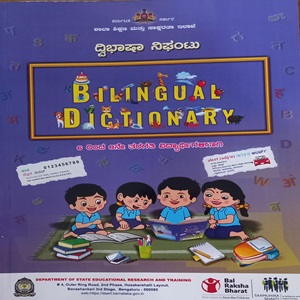
Karnataka’s Department of School Education, in collaboration with the Samagra Shiksha wing, has developed a Kannada-English bilingual dictionary aimed at enhancing language proficiency among school children across the State.

Karnataka Govt and British Council Join Hands to Enhance Rural Learning with Digital Library Access in 10 Districts
3. Higher Education Minister M.C. Sudhakar said that 5,000 vacant posts in the Higher Education Department, including that of assistant professors, will be filled in a phased manner.

Education reforms committees headed by MLAs to be constituted at taluk level in Karnataka.
Voices on Education
J S Rajput writes: How quality of higher education is tied to primary education

Rukmini Banerji writes: With increasing preschool enrolment, road ahead for early childhood education
Centre for Educational and
Social Studies
The Centre for Educational and Social Studies (CESS) is a registered society established in 2006. Since its inception CESS has been working in the field of education. CESS, guided by its vision of bringing about ‘Social Transformation Through and With Education’ is striving to draw the attention of stakeholders, including State and Central Government, on vital issues of education. We at CESS engage in Research, Policy Advocacy and Capacity Building in the broad sphere of Education. In the recent past, since the unveiling of NEP, CESS has conducted over 100 webinars and stakeholders consultations on policy awareness and on policy implementation and has reached out to more than 30,000 stakeholders of education. CESS has launched ‘NEP Ready’-a capacity building training workshops to facilitate HEIs in the effective implementation of NEP 2020.
Disclaimer: This document is being presented to you for your information. The information and opinions in the news articles contained in Shikshana Mahithi are captured from the government websites and authors of the articles. CESS is a not-for-profit organization and does not endorse the presented news.