Shikshana Mahiti — January 2025
January 1, 2025
Announcements
The University Grants Commission (UGC)'s has released draft notification regarding the maintenance of standards of higher education in the country, and it is based on the progress made by HEIs in the implementation of NEP 2020.
UGC has revised the UGC Regulations on Minimum Qualifications for Appointment of Teachers and Other Academic Staff in Universities and Colleges and Measures for the Maintenance of Standards in Higher Education.
National News
The University Grants Commission (UGC) launched a portal, PhD Excellence Citation, where each university can nominate up to five doctoral theses, one each from five disciplines for recognition by the higher education body.
The All India Council for Technical Education (AICTE), under the Department of Higher Education, Ministry of Education, Government of India, has evaluated the Intercell Career Mentoring Program as a valuable initiative for students.
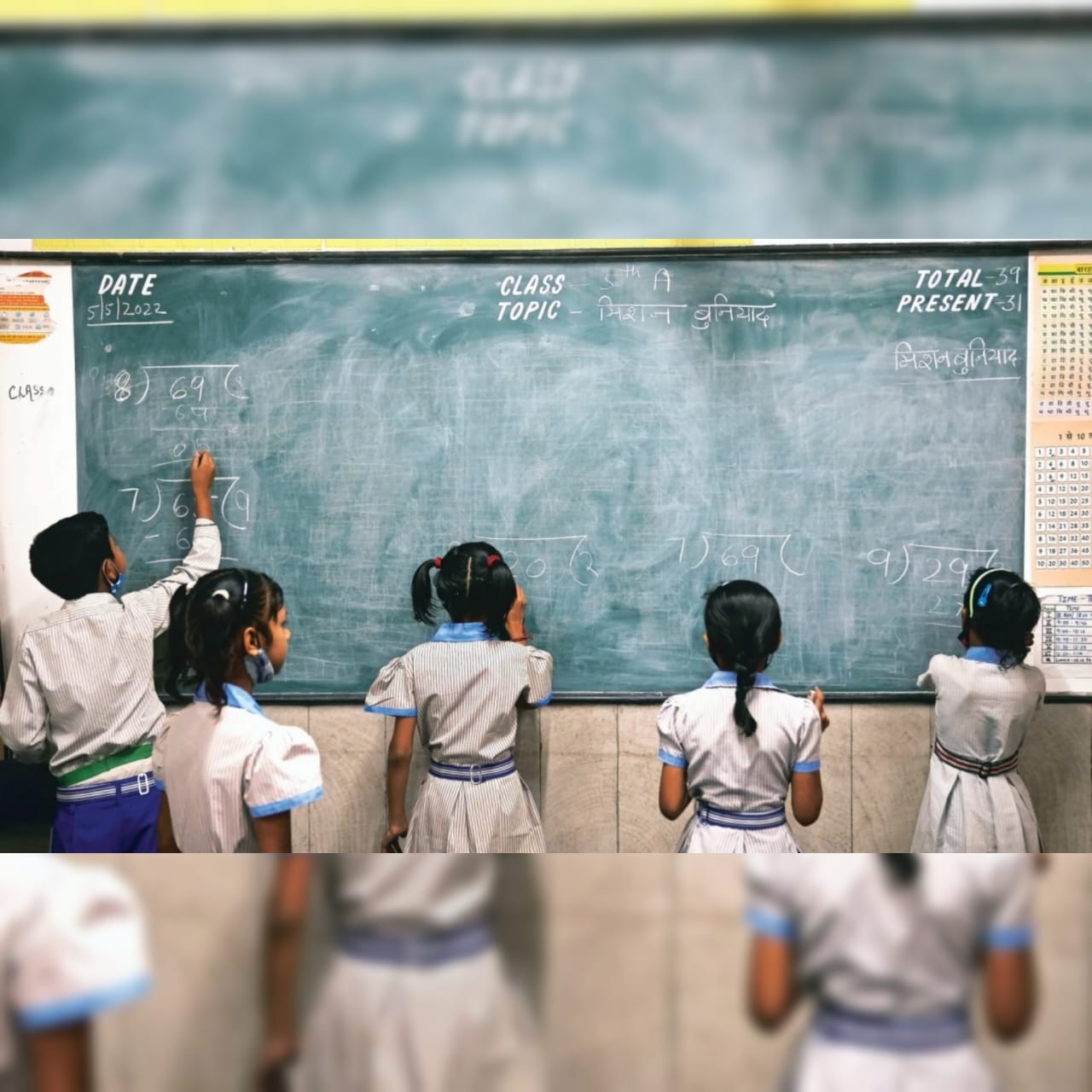
Student enrolment goes up by 76% in 40 PM-SHRI schools in 5 states.
SC seeks Centre's response on caste discrimination in educational institutions.
Edu-Prism
Vedic Education System in India
The Vedic education system focused on developing physical, moral, and intellectual powers, promoting salvation, and was free and exemplary. Education was citta-vrtti - nirodha, controlling the mind, driving it to its deeper layers, its subterranean depths not ruffled by the ripples of the surface, the infinite distractions of the material world by which the mind wears itself out in fatigue. It sought to address the complete growth of the student since intellectual knowledge alone was not accepted as being sufficient for self-fulfillment and spiritual enlightenment. The system helped the development of personality by cultivating self-respect, self-reliance and self-restraint.
Learning environments, Learning and teaching methods, curriculum and teacher-student relationships are factors that determine the outcome of education. Ashrams, Gurukuls and universities were excessively residential, inducing community skills. Also students in the ancient ashram schools performed menial chores and shared responsibility for the upkeep of the school premises. These institutions were mostly self-sustainable.
The curriculum was more inclusive than what we would expect an ancient Vedic education system to have. The curriculum encompassed a rich tapestry of knowledge, comprising the four Vedas, six Vedangas, Upnishads, Darshanas, Puranas, and Tarka Shastra. The six Vedangas—Shiksha, Chhandas, Vyakarana, Nirukta, Jyotisha, and Kalpa—coexisted with the Darshanas—Nyaya, Baiseshika, Yoga, Vedanta, Sankhya, and Mimasa. Algebra, Geometry, and grammar assumed significant roles, with luminaries like Panini leaving an indelible mark on the domain of grammar.
Brihaddranyaka Upanishad clearly states that education in the highest knowledge depends upon the three processes following one another, viz. (1) Sravana, (2) Manana, and (3) Nididhyasana.
Sravana is to listen. Six phases constitute Sravana.
a. Upakarma - A formal ceremony performed before reading.
b. Abhyasa - Constant practice or recitation of the texts taught.
c. Apilrvata - Immediate apprehension of the meaning.
d. Phala - Comprehension of results.
e. Arthavdda - Studying the explanatory texts.
f. Upapatti - Attainment of Conclusions.
Manana is meditation, intellectual apprehension of truth. Nidhidhyasana is the realization of the knowledge.” In Vedic education, meaningless outward knowledge has been condemned and a person having meaningless outward knowledge has been compared with a donkey loaded with ‘Chandan wood’.
Hence, the realization of knowledge is important in the learning process.
Additionally, Kautilya too enumerates the following steps of Vedic study:
(1) Susrusha (eagerness to listen to the words of the teacher as they fall from his lips)
(2) Sravanam (grasping by the ear the lessons of the teacher)
(3) Grahanam (apprehension of the teacher's words)
(4) Dharanam (retention)
(5) Ohapoha (discussion)
(6) Vijnana (full knowledge of the meaning conveyed by the teacher's words or lessons)
(7) Tattvabhinivesha (comprehension of the underlying truths of the teacher's lessons).
A low teacher/student ratio was necessary within the ancient Indian concept of education. Along with a remarkable teacher/student ratio, Sastrarthas or learned debates were constantly held in colleges where students of literature, poetics, philosophy, and logic were called upon to defend their own propositions and attack those of their opponents. The use of parables was often made in expounding obscure principles, as would appear from the plot of the Hitopadesa and the Panchatantra, where principles of politics are taught under the guise of telling stories about animals. The conference method for the promotion and diffusion of learning, the method of discussion in seminars and academies, was first evolved in India, as evidenced by the Rigveda.
The Vedic education system advocates a holistic approach to learning. It focuses on the development of the physical, intellectual, moral, and spiritual aspects of life. It emphasizes self-realization, community living, and intellectual rigor through an all-inclusive and profound curriculum. Although very ancient, the principles are yet very applicable for modern education as well in defining what character, curiosity, as well as critical thinking with academic knowledge entail.
Spurthi P
Intern, CESS RV University, Bengaluru
Karnataka News
NAAC accreditation made mandatory for affiliations in Karnataka
Voices on Education
Megha Chaturvedi writes: Navigating the future | AI's role in shaping Indian education1. Benjamin Laker writes India’s Economic Growth Depends on Fixing Higher Education

H.B. Raghavendra writes: Why India needs to prioritise teacher development in higher education?
Centre for Educational and
Social Studies
The Centre for Educational and Social Studies (CESS) is a registered society established in 2006. Since its inception CESS has been working in the field of education. CESS, guided by its vision of bringing about ‘Social Transformation Through and With Education’ is striving to draw the attention of stakeholders, including State and Central Government, on vital issues of education. We at CESS engage in Research, Policy Advocacy and Capacity Building in the broad sphere of Education. In the recent past, since the unveiling of NEP, CESS has conducted over 100 webinars and stakeholders consultations on policy awareness and on policy implementation and has reached out to more than 30,000 stakeholders of education. CESS has launched ‘NEP Ready’-a capacity building training workshops to facilitate HEIs in the effective implementation of NEP 2020.
Disclaimer: This document is being presented to you for your information. The information and opinions in the news articles contained in Shikshana Mahithi are captured from the government websites and authors of the articles. CESS is a not-for-profit organization and does not endorse the presented news.