Shikshana Mahiti — January 2024 (Part 2)
January 1, 2024
Announcements
From the year 2024-25, AICTE will regulate HEIs offering BBA, BMS and BCA courses for maintaining uniform quality and academic standards across management and computer applications programmes on similar lines of post-graduation courses.
UGC has invited feedback/recommendations from the stakeholders on draft UGC(Fitness of Colleges for receiving Grants) Rules, 2024.
UGC has done press release on the major Reforms in Accreditation of Higher Education Institutions.
UGC has launched “Guidelines to provide Equitable Opportunity for the Socio-Economically Disadvantaged Groups (SEDGs) in the HEIs” and has asked all the HEIs to implement the same.
Ministry of Education has released guidelines for Regulation of Coaching Centre for consideration by States/UTs by way of appropriate legal framework.
National News
Government of India directs all schools and HEIs to provide study material for every course in Indian languages digitally within the next three years.

Ministry of Education releases All India Survey on Higher Education (AISHE) 2021-2022.
Union Minister for Education and Skill Development & Entrepreneurship, Shri Dharmendra Pradhan launched ‘Ministry of Education - AICTE Investor Network’ to bring together faculty, students and investors into one platform.
The National Council of Educational Research and Training (NCERT) is developing courses for parents, teachers and students to learn the 22 scheduled Indian languages.
The Central Government launches the 'Anuvadini' app, an Artificial Intelligence-driven platform, to provide digital study materials in Indian languages.
NAAC has decided that the Higher Education Institutions (HEIs) in the country will be categorised either as 'accredited' or 'not accredited'.
Edu-Prism
Education of Migrant Construction Workers in Bangalore: Issues and Concerns
Education plays a critical role in holistic development – the mental, physical and the emotional development of the children. The Sustainable development goal 4 calls for ensuring inclusive and equitable quality education and promote lifelong learning opportunities for all by 2030. There are various policies and programmes implemented by the central as well as the state government in India to promote the school education. Some of them include establishment of National Education Framework, enactment of Right to Education Act 2009 with the mandate of providing free textbooks, uniforms and mid-day meals to all government school children, Sarva Shikshana Abhiyan etc. Despite of these initiatives, there are numerous challenges, including lack of equal access to education which is predominantly evident in rural and under-privileged communities such as migrant construction workers.
Bangalore, being the IT capital of the country witnessing a huge migration of construction workers from all over the country to meet the enormous demand for construction activities of the city. Most of these workers are from Orissa, West Bengal, Tamil Nadu, Uttar Pradesh, Jharkand and northern districts of the state. The Intra-state workers usually migrate to the city due to drought or floods which have affected the traditional agriculture-based livelihoods. These workers live in small shelters near the construction site or in slums or on railway lands etc. Most of the children of these migrant construction workers do not have access to education facilities despite the provision of Building and Other Construction Workers (Regulation of Employment and Conditions of Service) Act 1996 and Inter-State Migrant Workmen (Regulation of Employment and Conditions of Service) Act 1979.
The children of registered construction workers are eligible for educational and scholarship benefits under the Construction Worker’s Welfare Board (CWWB). However, majority of the construction workers are not aware of the existence of the Board and the many welfare benefits provided under. In addition, majority of them do not register and posses’ identity card issued by the Board to make them eligibility to receive these benefits. Another major issue is the nature of their job which keep on moving from one construction site to another. This makes it difficult to the children to remain in one school till they complete their study or to be regular to school. Also, the timings of Anganwadi centres are not conducive for the parents where both are working as construction workers. It is common that they take their children to construction site where, the children are vulnerable to respiratory disorders with exposure to dust etc.
In conclusion, despite there are various initiatives undertaken by the state and the central government, access to education is still a long way to achieve in terms of equal access to quality education for the migrant workers children. To address these issues, it is necessary to create awareness among the construction workers regarding the provision of certain facilities and it is important that the government should take appropriate actions to bring the construction workers in the mainstream of policy making and its effective implementation.
Latha N
Research Associate, CESS
Karnataka News
Karnataka govt. constitutes monitoring committee headed by Deputy Chief Minister to start 500 Karnataka Public Schools.
Hundreds of volunteers representing different organisations, launched an indefinite agitation in Kalaburagi demanding proper teaching and non-teaching staff and adequate infrastructure for government schools in Kalyana Karnataka region.
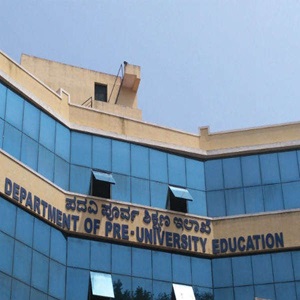
The Pre-University College Lecturers’ Association has asked the government not to disturb the identity of the department of pre-university education in the state education policy that is being drafted.
Voices on Education
Vrijendra writes: One of the primary reasons why we lag far behind the rest of the world in our educational achievements, even in comparison to many countries in the global south, is that we have never spent enough on education.


Anulekha Nandi writes: The NEP 2020 can help ensure that a holistic approach towards the integration of technology with different functional requirements of the sector is undertaken.
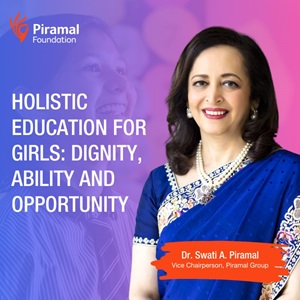
Swati Piramal writes: Holistic education for girls: Dignity, ability and opportunity.
Centre for Educational and
Social Studies
The Centre for Educational and Social Studies (CESS) is a registered society established in 2006. Since its inception CESS has been working in the field of education. CESS, guided by its vision of bringing about ‘Social Transformation Through and With Education’ is striving to draw the attention of stakeholders, including State and Central Government, on vital issues of education. We at CESS engage in Research, Policy Advocacy and Capacity Building in the broad sphere of Education. In the recent past, since the unveiling of NEP, CESS has conducted over 100 webinars and stakeholders consultations on policy awareness and on policy implementation and has reached out to more than 30,000 stakeholders of education. CESS has launched ‘NEP Ready’-a capacity building training workshops to facilitate HEIs in the effective implementation of NEP 2020.
Disclaimer: This document is being presented to you for your information. The information and opinions in the news articles contained in Shikshana Mahithi are captured from the government websites and authors of the articles. CESS is a not-for-profit organization and does not endorse the presented news.