Shikshana Mahiti — January 2024
January 1, 2024
Announcements
UGC has released Implementation Guidelines on “Sustainable and Vibrant University-Industry Linkage System for Indian Universities”.
National News
Department of School Education & Literacy, Ministry of Education, Government of India has launched ‘Prerana: An Experiential Learning program’, aiming to offer a meaningful, unique, and inspiring experience to all participants, thereby empowering them with leadership qualities.
Department of School Education and Literacy has given an year end review of the initiatives and programmes undertaken during the year.
The University Grants Commission (UGC) has launched a comprehensive plan for its officials to build and enhance their abilities, efficiency and qualifications.

IGNOU launches four-year undergrad program to offer diverse educational opportunities to students.
UGC Invites Authors & Critics To Write UG Books In 12 Indian Languages.
Edu-Prism
Learning Disability among School Students
Learning disability is a common challenge that many school students face. It refers to a neurological condition that affects the way a person processes information. It can lead to difficulties in reading, writing, speaking, listening, and even in solving math problems. Learning disabilities are not related to intelligence, and students with learning disabilities are just as capable as their peers, but they require different teaching methods and accommodations to succeed academically.
The prevalence of learning disabilities among school students in India is a growing concern. It not only affects the academic performance of the students but also hinders their overall development and future prospects. The most common types of learning disabilities observed in Indian students are dyslexia, dysgraphia, dyscalculia, and attention-deficit/hyperactivity disorder (ADHD).
One of the major challenges in addressing learning disabilities is the lack of awareness and understanding of the condition. Many people, including parents, teachers, and even some healthcare professionals, do not fully comprehend the impact of learning disabilities on a child's education. This results in late diagnosis and intervention, which can have a significant impact on a child's academic progress.
Another significant factor contributing to the issue is the stigma and discrimination associated with learning disabilities. In a country where academic success is highly valued, students with learning disabilities are often labeled as "lazy" or "dumb," which can lead to low self-esteem and academic underachievement. As a result, many students with learning disabilities face bullying and teasing from their peers, making it even more challenging for them to cope with their condition.
Though there is an effort to address learning disabilities, still there is a lack of specialized support and accommodations, such as extra time during exams, assistive technology, and individualized education plans, which are crucial for the academic success of students with learning disabilities.
To address these challenges, it is essential to create awareness and understanding about learning disabilities among parents, teachers, and the general public. Schools should have trained professionals who can identify and support students with learning disabilities. The curriculum and teaching methods should also be modified to cater to the needs of these students. Additionally, the government must provide necessary support and resources to schools to ensure the inclusion of students with learning disabilities.
To conclude, learning disabilities among school students in India are a significant concern that needs to be addressed. With the right support and accommodations, students with learning disabilities can achieve academic success and lead a fulfilling life. It is crucial for all stakeholders, including parents, teachers, schools, and the government, to work together to create a more inclusive and supportive environment for students with learning disabilities.
By
Dharani S
Research Associate, CESS
Karnataka News
Minister Dr M C Sudhakar’s assurance of Rs 5,000 hike in salary, post-retirement monetary benefits and health insurance has not found favour with the guest lecturers undertaking a foot march.
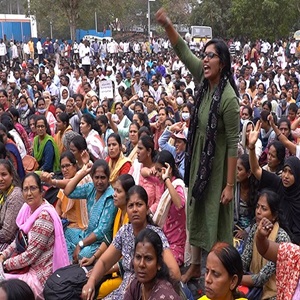
A large majority of educationists during a discussion called by the committee framing the framing the State Education Policy (SEP) are not in favor of the Four Year Undergraduate Programme.
Voices on Education
Sridhar Rajagopalan writes: Looking back at education in 2023.

Dewangi Sharma writes: Skill India - Education to Employment Bridge
Dr. Wani writes: Enshrined in NEP 2020: What does “Rootedness in India” means?
Centre for Educational and
Social Studies
The Centre for Educational and Social Studies (CESS) is a registered society established in 2006. Since its inception CESS has been working in the field of education. CESS, guided by its vision of bringing about ‘Social Transformation Through and With Education’ is striving to draw the attention of stakeholders, including State and Central Government, on vital issues of education. We at CESS engage in Research, Policy Advocacy and Capacity Building in the broad sphere of Education. In the recent past, since the unveiling of NEP, CESS has conducted over 100 webinars and stakeholders consultations on policy awareness and on policy implementation and has reached out to more than 30,000 stakeholders of education. CESS has launched ‘NEP Ready’-a capacity building training workshops to facilitate HEIs in the effective implementation of NEP 2020.
Disclaimer: This document is being presented to you for your information. The information and opinions in the news articles contained in Shikshana Mahithi are captured from the government websites and authors of the articles. CESS is a not-for-profit organization and does not endorse the presented news.