Shikshana Mahiti — February 2025
February 1, 2025
Announcement

The Supreme Court has mandated Head of Institutions to implement a compulsory environmental education course at the undergraduate level as per the UGC guidelines.
With the suggestion to discontinue UGC CARE listing of journal, UGC has released suggestive parameters for choosing peer-reviewed journals by faculty members and students developed by a group of experts.
The UGC has asked the Head of Institutions to take appropriate measures to conducted student induction programmes through "Deeksharambh"
The University Grants Commission (UGC) has drafted the University Grants Commission (Promotion of Equity in Higher Education Institutions) Regulations, 2025 and has sought feedback/suggestions from the stakeholders.
UGC has instituted "Ph.D. Excellence Citation" to honour young researchers for their significant contributions in their field of study leading to Ph.D. degrees
National News
Union Finance Minister Nirmala Sitharaman presented the Union Budget 2025. In it, she outlined a comprehensive plan to strengthen India's educational infrastructure and 7 key education headlines.

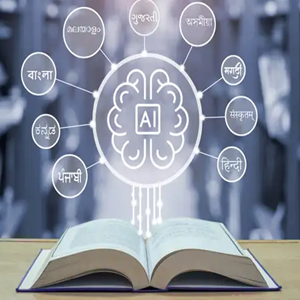
India To Translate Higher Education Books Into 22 Native Languages Using AI, Says Dr Sahasrabudhe, NETF Chairman
The government plans to establish 50,000 Atal Tinkering Labs and provide broadband connectivity to all government secondary schools
NITI Aayog Releases Policy Report on ‘Expanding Quality Higher Education through States and State Public Universities’.
AICTE introduces initiatives to help student startups.
The Central Board of Secondary Education (CBSE) in an official notification urged students, parents and educators to prioritise institutions that align with national education standards.
The latest Times Higher Education (THE) World Reputation Rankings 2025 are out, and four Indian universities have made it to the list.
AICTE’s new fellowship programme to help professors gain industry experience and get paid Rs 1 lakh over the salary
Edu-Prism
The Role of Higher Education in Transforming the Lives:
A Case Study on the Irular Tribal Community in Coimbatore District
Higher education is a pivotal factor in driving socio-economic development, particularly among marginalized communities such as the Irular tribal community in Tamil Nadu. Access to higher education presents an opportunity to break cycles of poverty and enhance financial stability. However, structural barriers such as financial constraints, inadequate vocational training, and limited awareness of government-sponsored skill development programs impede their progress. This study examines the role of higher education in transforming the economic and social lives of the Irular community, analysing the challenges they face and providing policy recommendations to bridge the existing educational gaps.
Education is recognized as a powerful tool for social mobility and economic empowerment, particularly for Scheduled Tribes. While government initiatives have sought to improve educational access, disparities persist, especially in higher education. Various socio-economic and cultural barriers, such as geographic isolation and financial instability, contribute to high dropout rates and low enrolment in tertiary education. The focus of this study is to assess the impact of higher education on the economic independence, employment prospects, and career aspirations of the Irular community in the Coimbatore district.
The research was conducted using a stratified random sampling method, with data collected from 53 respondents who had completed higher education. The study employed structured questionnaires and personal interviews to understand educational experiences, economic outcomes, and policy effectiveness. Findings indicate that although 84.9% of respondents had pursued undergraduate education, only 13.2% attained postgraduate degrees. Financial constraints emerged as the most significant barrier, with a mean score of 4.36, followed by a lack of proper guidance (mean=3.66). Furthermore, employment trends revealed that 52.8% of respondents were employed in the private sector, while only 15.1% pursued self-employment, highlighting a gap between education and entrepreneurial ventures.
A major concern highlighted in the study is the underutilization of vocational training programs. Despite the availability of government-sponsored skill development schemes, only 39.6% of respondents were aware of them, and 60.4% had never undergone any vocational training. This lack of awareness and integration of vocational skills into the academic curriculum limits employment opportunities for Irular graduates. Moreover, hypothesis testing revealed significant associations between socio-economic and educational factors. For instance, a strong correlation was found between financial barriers and monthly household income (p=0.003), geographical area and access to guidance (p=0.000), and education and job stability (p=0.000). These findings underscore the need for targeted interventions to improve higher education accessibility and outcomes.
To address these challenges, several policy recommendations have been proposed. Firstly, financial assistance in the form of scholarships and tuition fee waivers should be expanded and made more accessible to Irular students. Additionally, integrating vocational training into higher education curricula can bridge the gap between education and employment. This would enable students to acquire practical skills that enhance their employability and income-generation potential. Furthermore, digital learning centers should be established in remote tribal areas to provide better access to educational resources. Government agencies and educational institutions must also strengthen community outreach programs to improve awareness of existing skill development initiatives.
Beyond financial support and vocational training, mentorship programs and career guidance centers can play a crucial role in helping Irular students navigate higher education and employment pathways. Creating networks between higher education institutions and industries can facilitate internships and job placements, ensuring a smoother transition from education to the workforce. Additionally, ensuring tribal representation in policymaking will lead to more inclusive and effective education policies.
The study concludes that higher education has the potential to significantly improve the socio-economic conditions of the Irular tribal community. However, financial constraints, limited awareness of government schemes, and a lack of vocational training continue to hinder progress. Addressing these barriers through targeted policy interventions, skill-based education, and enhanced financial support can help bridge the gap and foster long-term socio-economic growth for the community. Future research could explore the long-term career outcomes of Irular graduates, the impact of digital learning on tribal education, and the role of women's higher education in tribal socio-economic upliftment. Expanding research to other tribal communities will provide broader insights for policy formulation and implementation.
By improving access to higher education and integrating vocational training, the Irular community can leverage education as a tool for economic upliftment. Holistic strategies, including financial aid, skill development, and digital education, must be prioritized to empower Irular youth and ensure their inclusion in India's broader socio-economic progress.
Sowmiya E
Intern, CESS
2nd Semester, Master of Applied Economics
PSGR Krishnammal College for Women, Coimbatore
Karnataka News
The Karnataka government is planning to impart skill training to children by introducing the ‘Skill at School’ programme in the next academic year.
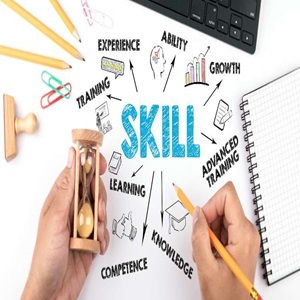
Primary and Secondary Education Minister announced that Skill - Oriented classes will be started for students of grade 8th to 12th from the next academic year along with curriculum in the state.
Voices on Education
Dr Asghar Zaidi/Dr Anjum Majeed write: Higher education through AI: a vision for student-centred learning
Varya Singh and Siddesh Sarma write: Rethinking professional development for teachers in India.
Dharmendra Pradhan writes: Beyond Exams: The real learning thrives in nurturing environments.
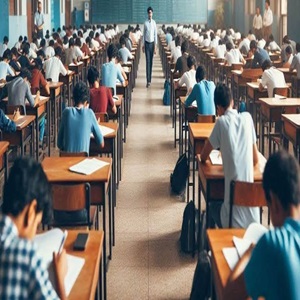

Prachi Salve writes: 50% more women in higher education in India, but fewer choose engineering, IT.
Ravindran A M writes: State public universities key to higher education revival
Centre for Educational and
Social Studies
The Centre for Educational and Social Studies (CESS) is a registered society established in 2006. Since its inception CESS has been working in the field of education. CESS, guided by its vision of bringing about ‘Social Transformation Through and With Education’ is striving to draw the attention of stakeholders, including State and Central Government, on vital issues of education. We at CESS engage in Research, Policy Advocacy and Capacity Building in the broad sphere of Education. In the recent past, since the unveiling of NEP, CESS has conducted over 100 webinars and stakeholders consultations on policy awareness and on policy implementation and has reached out to more than 30,000 stakeholders of education. CESS has launched ‘NEP Ready’-a capacity building training workshops to facilitate HEIs in the effective implementation of NEP 2020.
Disclaimer: This document is being presented to you for your information. The information and opinions in the news articles contained in Shikshana Mahithi are captured from the government websites and authors of the articles. CESS is a not-for-profit organization and does not endorse the presented news.