Shikshana Mahiti — February 2024
February 1, 2024
Announcements
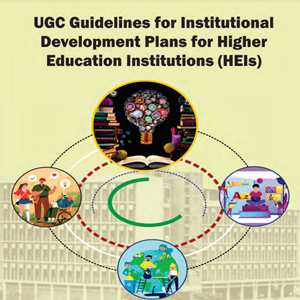
UGC has released Guidelines for Institutional Development Plans for Higher Education Institutions.
UGC has formulated Guidelines for Internship/Research Internship for Undergraduate Students aimed at improving the employability skills of the students.
National News
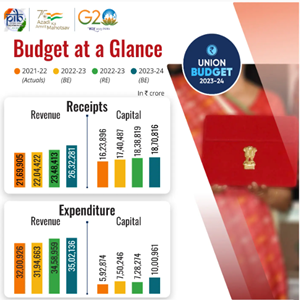
Highlights of the Central Budget with respect to Education Sector.
APAAR (Automated Permanent Academic Account Registry) through Common Service Centres (CSCs) in remote villages of the country was launched.
The University Grants Commission (UGC) has received an application from a private university in Malaysia.
Professor Anil Sahasrabudhe, Chariperson, NAAC & NBA discusses IITs debut in accreditations, current system drawbacks, and flexibility in the new system.


The UGC Chairman has announced the introduction of a credit system for schools and a skill-based curriculum for students.
Edu-Prism
Bridging the Gap: Strengthening Faculty Through Capacity Building programme in HEIs
College faculty, unlike the school faculty get it into the profession without any formal training or preparation. The new initiatives and challenges facing higher education, the responsibilities of faculty have become increasingly complex. This lack of preparation exacerbates the difficulties faced by faculty in navigating these changes effectively.
Training and capacity building programs are frequently prioritized in schools, neglecting Higher Education Institutions (HEIs), despite their crucial role in shaping the educational landscape. This oversight can lead to a decline in quality within HEIs, impacting the overall effectiveness of education system. However, neglecting HEIs beyond schools creates gaps in development efforts, hindering overall progress.
Faculty in HEIs encounter challenges such as limited access to training on modern teaching methods and technology, and use new teaching techniques focused on subject knowledge rather than teaching skills, which overlooks effective teaching methods and students’ engagement. In addition, there exists gap between teacher being trained and meet the diverse needs of students. Hence, there is a need for Professional Development and Career Advancement of the faculties at HEIs which can be achieved through effective human resource planning. It is indispensable to train all the teachers, recognizing their significant role in students' holistic well-being
It is essential to empower faculty through capacity building programs to fulfil their roles and responsibilities with exceptional creativity and excellence. Comprehensive training, integrating dynamic teaching methods, is crucial for transforming education to meet diverse student needs.
Capacity Building Program focusing on inclusivity, self-management, and effective decision-making empowers higher education educators. Training the faculty with positivity, influences the student’s academic performance and faculty who participate in capacity-building programs gain modern teaching skills, resulting in better students’ achievement. Government funding and private sector involvement is necessary to support this initiative. It is indispensable to train all the teachers, recognizing their significant role in students' academic success.
Capacity building initiatives also focuses on nurturing teachers into future leaders. Academic leadership fostered through training programs will have a significant impact on student’s performance. Empowering teachers with specialized skills not only enable them with enriching learning experiences but also enhances classroom effectiveness and prepare students for futuristic challenges and opportunities.
Aligning with NEP 2020 objectives, implementing compulsory formal education for HEIs faculty would address these discrepancies, enhancing teaching quality and transforming institution as a centre of excellence.
Bhagya G B
Sr. Assistant Professor CESS
Karnataka News
CM emphasizes on reading preamble of the Indian constitution in educational institutions.

Karnataka tops the list of Indian states with high number of foreign students.
A delay is likely in the printing and supply of textbooks to school children in Karnataka for the 2024-25 academic year as the Textbook Revision Committee is yet to submit its report to the State Government.
Voices on Education
S Vaidhyasubramaniam writes: Trifecta of School, Teacher and Higher Education.

Neil Ghai writes: Higher education 'enrolment cliff' likely to open doors for more Indian students in American Universities.
R Krishnakumar writes: Learning deficits need to be corrected when they happen

Centre for Educational and
Social Studies
The Centre for Educational and Social Studies (CESS) is a registered society established in 2006. Since its inception CESS has been working in the field of education. CESS, guided by its vision of bringing about ‘Social Transformation Through and With Education’ is striving to draw the attention of stakeholders, including State and Central Government, on vital issues of education. We at CESS engage in Research, Policy Advocacy and Capacity Building in the broad sphere of Education. In the recent past, since the unveiling of NEP, CESS has conducted over 100 webinars and stakeholders consultations on policy awareness and on policy implementation and has reached out to more than 30,000 stakeholders of education. CESS has launched ‘NEP Ready’-a capacity building training workshops to facilitate HEIs in the effective implementation of NEP 2020.
Disclaimer: This document is being presented to you for your information. The information and opinions in the news articles contained in Shikshana Mahithi are captured from the government websites and authors of the articles. CESS is a not-for-profit organization and does not endorse the presented news.