Shikshana Mahiti — August 2025
August 1, 2025
Announcement

UGC has released draft Learning Outcomes-based Curriculum Framework (LOCF) puts focus on ‘ancient wisdom’ and has sought suggestions from the stakeholders.
Ministry of Education releases report on Unified District Information System for Education Plus (UDISE+) 2024-25 on school education of India.

National News
Cabinet approves Budgetary Support for Multidisciplinary Education and Research improvement in Technical Education (MERITE) Scheme with an outlay of Rs.4200 crore
CBSE has approved a proposal to introduce open book assessments for Class 9 final exams from the academic session 2026-27.
Nation-wide week-long mega assessment and distribution camps for Children with Special Needs (CwSN) conducted under Samagra Shiksha to commemorate 5 Years of NEP 2020.
OpenAI has announced that it will distribute free ChatGPT Plus accounts to 5 lakh teachers in India.

Edu-Prism
Karnataka State Education Policy 2025: Key Highlights
The Government of Karnataka has released the State Education Policy (SEP) 2025, prepared under the chairmanship of Prof. Sukhadeo Thorat with contributions from 379 experts across 35 task forces. Spread across three volumes and more than 2,000 pages, the policy provides detailed recommendations for school, higher, and professional education.
School Education
SEP 2025 recommends a 2+8+4 structure—two years of pre-primary, eight years of elementary, and four years of secondary education. It proposes Kannada or the mother tongue as the medium of instruction until Class V and introduces a two-language policy combining Kannada/Mother Tongue and English. The policy calls for the creation of a Comprehensive Curriculum for School Education (CCSE) and a move away from reliance on NCERT textbooks, encouraging development of locally relevant content. It also suggests extending the Right to Education (RTE) Act up to 18 years, thereby covering senior secondary education.
To expand access, the SEP proposes residential schools for migrant children, universalisation of secondary education, and aligning public school quality with Kendriya Vidyalayas. On governance, it suggests establishing a regulatory body for private schools, strengthening Block Education Offices, converting DSERT into an autonomous SCERT and reviving a Directorate for Lifelong Learning. On finance, the state is advised to allocate 30% of total expenditure to education, ensure annual per-student spending growth of 5–10%, and earmark funds for equity, quality and teacher training.
Higher Education
The policy recommends raising education spending to 4% of GSDP by 2034–35, with 1% for higher education. At least 25% of these funds should be directed to infrastructure. It also proposes a 3+2 model for undergraduate and postgraduate courses in general education and a 4+2 model for professional programmes.
For access and inclusivity, SEP 2025 suggests free education for girls in government, aided, and private unaided institutions, stipends to reduce migration-linked dropouts, and expanded scholarships for low-income groups. It also recommends targeted measures to improve participation from disadvantaged communities.
Research and innovation are supported through the proposed State Research Foundation with ₹500 crore seed funding and state-funded Junior Research Fellowships for Ph.D. students. For quality, the policy suggests establishing a Karnataka State Council for Quality Assessment (KSCQA), filling all teaching vacancies within five years, and strengthening teacher training. Reservation rules are to be applied in private unaided institutions to ensure uniformity across the system.
Professional and Vocational Education
The policy emphasises job-oriented diploma and certificate courses, especially in rural and agriculture-related fields. It recommends forming division-specific skilling councils led by industry leaders and promoting entrepreneurship. Emerging fields such as AI, data science, biotechnology and quantum computing are identified for expansion in universities and polytechnics. For agriculture, SEP 2025 proposes diplomas in precision farming and food processing, developing Kannada-language textbooks, and creating research networks across farm universities.
Conclusion
The SEP 2025 provides a structured set of recommendations aimed at strengthening education in Karnataka. It outlines reforms across school, higher, and professional education, with attention to access, language, governance, funding, and future skills. The policy serves as a comprehensive roadmap for the state’s education sector in the years ahead.
Dharani S
Assistant Professor
Karnataka News
Karnataka State Education Policy (SEP) Commission has recommended a two-language policy in school education and that Kannada or the mother tongue must be the medium of instruction up to Class 5.
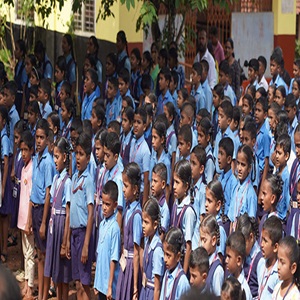
The Karnataka government will establish 6,500 Karnataka public schools and 5,000 nursery schools in the next few years, said Madhu Bangarappa Minister for Primary and Secondary Education.
Voices on Education
Sukanta Majumdar writes Learning the NEP way.
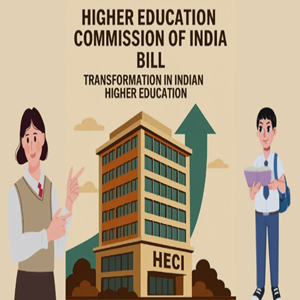
Chetan Singai writes Why the HECI Bill matters for higher education in India
Prof. Arun C Mehta writes: Karnataka State Education Policy 2025: Major Findings & Deviations from NEP 2020.
Aman Sahni writes: How NEP 2020 can transform Indian learning at par with international standards.

Centre for Educational and
Social Studies
The Centre for Educational and Social Studies (CESS) is a registered society established in 2006. Since its inception CESS has been working in the field of education. CESS, guided by its vision of bringing about ‘Social Transformation Through and With Education’ is striving to draw the attention of stakeholders, including State and Central Government, on vital issues of education. We at CESS engage in Research, Policy Advocacy and Capacity Building in the broad sphere of Education. In the recent past, since the unveiling of NEP, CESS has conducted over 100 webinars and stakeholders consultations on policy awareness and on policy implementation and has reached out to more than 30,000 stakeholders of education. CESS has launched ‘NEP Ready’-a capacity building training workshops to facilitate HEIs in the effective implementation of NEP 2020.
Disclaimer: This document is being presented to you for your information. The information and opinions in the news articles contained in Shikshana Mahithi are captured from the government websites and authors of the articles. CESS is a not-for-profit organization and does not endorse the presented news.