Shikshana Mahiti — August 2024
August 1, 2024
National News
UGC has extended the validity of M.Phil. in Rehabilitation Psychology till 2025-26 academic year.
NITI Aayog has released a report on "Improving the Culture of Research and Development (R&D) in State Universities and Institutes"
UGC has released a list of 1,000 faculty members across the country who are trained in collaboration with IKS Division, Ministry of Education.
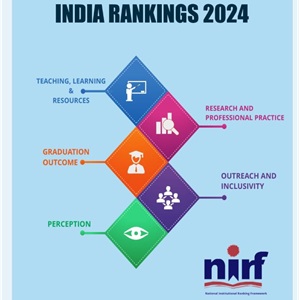
Union Education Minister, Shri Dharmendra Pradhan releases NIRF Rankings 2024.
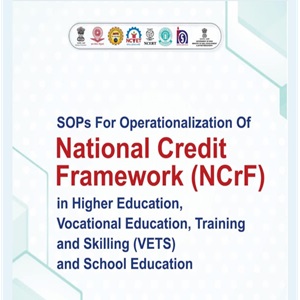
UGC releases SOPs to roll out credit system
Edu-Prism
Student Mental Health: Effectiveness of Campus Resources in India
In recent years, the understanding of mental health among students has gained significant attention in higher education. However, the effectiveness of on-campus mental health resources remains a critical concern in India. Universities and colleges are pivotal in supporting students' holistic development and well-being. So that they can navigate the challenges of transitioning from high school to higher education. For many students, transitioning from school to college is a period of profound change and stress. During the early years of a student, family acts as the primary caregiver and provides strength and support to the student. Students in higher education are often forced into an environment that demands greater independence and self-management. This shift can be particularly challenging for those who move away from their homes and families to pursue their studies. In India, the majority of youth leave their native place and move to metro cities in search of the best higher education. This sudden change is contrary to the environment where they lived. This transition acts as a cultural and financial shock for students coming from rural or semi-urban areas. Thus, the removal of safety nets of parental care led students to face new academic, social, and personal pressures mainly on their own.
The recurrent transition from school life to college life and, the pressure of being in reputed universities, uncertainties of getting fairly paid jobs, financial and academic pressures create undue stress anxiety among college students that often result in substance dependency and addiction. The NCRB data also shows that the rising suicide rates among students have gone up by 4.5 % as compared to 2020. Thus, the mental health issues among college students state the urgency of the need for the availability of specialised and accessible mental health services on college campuses. In the last decade, the availability of counselling facilities in colleges has increased significantly. Along with counselling services, these resources also include psychological services, mental health workshops and seminars, peer support programs, stress management activities, and crisis intervention services. These initiatives aim to create an environment that is supportive and can also help foster mental and emotional health and well-being, enabling students to thrive both academically and personally. Still, it has been found that students are reluctant to avail mental health resources in college due to its stigmatised and poor services.
Despite the widespread implementation of mental health resources in Higher Education Institutes (HEIs), there is limited empirical evidence regarding their effectiveness. While some studies suggest that these resources can have an affirmative impact on the mental health of students, others indicate that many students do not utilize the available services or are unaware of them. Thus, understanding the effectiveness of on-campus mental health resources is crucial for several reasons, as it can help us to identify the best practices and required interventions that can be replicated in different institutions. Further, by implementing regular awareness programs, improving outreach efforts, establishing a regulatory body, and developing comprehensive guidelines, universities and government bodies can enhance the accessibility and impact of these resources. Addressing these issues proactively will create a more supportive academic environment, ultimately fostering student success and resilience as they navigate the challenges of higher education.
Ms. Priyanshi Sharma
Intern, CESS
MA Development Studies, III Semester
Dr. B R Ambedkar University, Delhi
Karnataka News
Private universities in the state have agreed to give 40 per cent of their seats in general degree courses to the government from the 2025-26 academic year.

Karnataka to provide free CET, NEET coaching for 25,000 students.
The Department of School Education and Literacy (DSEL) has directed all schools in the state to have a fixed library period .

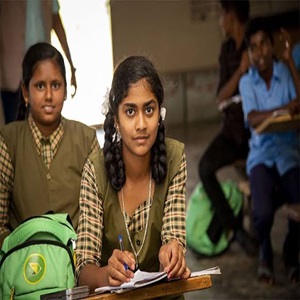
A total 35 govt high schools out of a total of 4,850 in the state for the academic year 2024-25, have less than 30 students admitted. Read more at:
Karnataka insists on 25% government quota seats in deemed-to-be medical universities.

Karnataka launches degree programmes with embedded apprenticeships, aims to make students industry ready
Voices on Education
Dr Rashpal Singh writes: Cluster Resource sharing.

Prof. Avanish Kumar writes: Budgeting Higher Education: Recalibrating India’s Intellectual Landscape.
Centre for Educational and
Social Studies
The Centre for Educational and Social Studies (CESS) is a registered society established in 2006. Since its inception CESS has been working in the field of education. CESS, guided by its vision of bringing about ‘Social Transformation Through and With Education’ is striving to draw the attention of stakeholders, including State and Central Government, on vital issues of education. We at CESS engage in Research, Policy Advocacy and Capacity Building in the broad sphere of Education. In the recent past, since the unveiling of NEP, CESS has conducted over 100 webinars and stakeholders consultations on policy awareness and on policy implementation and has reached out to more than 30,000 stakeholders of education. CESS has launched ‘NEP Ready’-a capacity building training workshops to facilitate HEIs in the effective implementation of NEP 2020.
Disclaimer: This document is being presented to you for your information. The information and opinions in the news articles contained in Shikshana Mahithi are captured from the government websites and authors of the articles. CESS is a not-for-profit organization and does not endorse the presented news.