Shikshana Mahiti — April 2024
April 1, 2024
Announcements
Central, State and Private Universities shall not require prior approval/recommendations/NOC from AICTE along with their application to UGC for offering UG, PG or PGDM programmes in ODL/Online mode.
HEIs recognized/entitled to offer ODL programmes are directed not to enroll any foreign nationals in ODL Programmes.

UGC has framed Guidelines for Admission and Supernumerary seats of International Students in Undergraduate and Postgraduate programmes in Higher Educational Institutions in India .
Ministry of Skill Development and Entrepreneurship is setting up Indian Institute of Skills at Mumbai and Hyderabad.
National News

UGC chairman suggests AI integration in online learning, ODL to offer personalised learning paths.
CBSE changes exam format for classes 11, 12 from this academic year and eliminates long-form answers
The National Council of Educational Research and Training (NCERT) has prepared bridge course guidelines to address learning gaps and build a foundation for easy transition.
The Central Board of Secondary Education (CBSE) has invited schools principals for a pilot programme to implement the National Credit Framework (NCrF).
Edu-Prism
NEP 2020 - Policy Formulation, Adoption to Implementation - A Long Winding Road
The National Education Policy (NEP) 2020 was adopted nearly four years ago, yet its implementation in higher education is progressing slowly. This sluggish pace can be attributed to a multitude of factors, including political dynamics, the revolutionary departure from long-standing practices and practical issues in implementation. For instance, the introduction of the three-year/four-year undergraduate degree has become a political battleground, with state governments leveraging this aspect to demonstrate their allegiance or opposition to the central government. However, rather than delving into the political intricacies, it is crucial to examine some fundamental changes envisioned by NEP 2020 and identify the challenges hindering its swift implementation.
NEP 2020 emphasizes several transformative elements, such as fostering rootedness and pride in India, promoting local language and culture, enhancing life skills, encouraging multidisciplinarity, recognizing the unique capabilities of each student, positioning education as a public service rather than a for-profit activity, and placing teachers at the core of the education system. Many of these changes face significant hurdles in large-scale implementation due to a lack of practical understanding, insufficient experience, and the inertia of existing methods.
One of the key aspects of NEP 2020 is multidisciplinarity, which aims to integrate various disciplines of knowledge rather than treating them as separate, disjointed subjects. Multidisciplinary learning can make education more engaging, activity-based, and comprehensible. While foundational education (nursery/pre-primary) has seen promising advancements through the efforts of organizations like the Government of Delhi's SCERT and Vidya Bharathi’s Saraswati Vidya Mandir schools who have already developed and implemented multidisciplinary teaching and learning plans for foundational education, higher education institutions unfortunately have lagged behind.
In higher education, the implementation of multidisciplinarity is complex. It requires a detailed syllabus, comprehensive lesson plans, and an extensive network of syllabi that explain how each component of every course will be taught. For example, a market visit can cover various aspects such as organization, IT, mathematics, taxation, pricing, and inventory management. While specific learning outcomes from such visits can be outlined in lesson plans, integrating the entire syllabus of these diverse courses in a coherent manner remains a significant challenge for curriculum developers and educators. The demand for repeatability (scale) and standardization in education further complicates the implementation of multidisciplinary learning, necessitating considerable effort.
Each component of NEP 2020 requires meticulous research and carefully planned steps towards implementation. For instance, positioning education as a public service might necessitate changes in corporate taxation, rules for NGOs, or CSR guidelines. Similarly, promoting rootedness and pride in India involves integrating Indian knowledge systems (IKS) into the curriculum. Unfortunately, many universities have introduced IKS as a separate course rather than integrating it appropriately within a multidisciplinary framework.
Transitioning from a globally acclaimed policy to a functioning, dynamic system is a long and arduous journey. The successful implementation of NEP 2020 demands contributions from all stakeholders, including policymakers, educators, administrators, and the community at large. Only through collective effort can NEP 2020 be effectively realized within a reasonable timeframe.
Dr. G P Sudhakar
Honorary Professor, CESS
Karnataka News
The number of admissions at State schools in Karnataka has seen a declining trend with parents leaning more towards Central board schools.

Karnataka SEP panel constitutes 30 task forces to address issues in education,
Voices on Education
Megha Chaturvedi writes: Navigating the future | AI's role in shaping Indian education


Sabrin Beg and others write: Enhancing secondary school learning: Role of remedial camps and teacher flexibility
Rishikesh B S writes: The spirit of NEP: How does it fare in action?
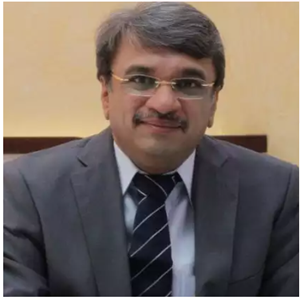
Prof Siddharth Jabade writes: Crucial to highlight the accomplishments and contributions of non-engineering disciplines.
Centre for Educational and
Social Studies
The Centre for Educational and Social Studies (CESS) is a registered society established in 2006. Since its inception CESS has been working in the field of education. CESS, guided by its vision of bringing about ‘Social Transformation Through and With Education’ is striving to draw the attention of stakeholders, including State and Central Government, on vital issues of education. We at CESS engage in Research, Policy Advocacy and Capacity Building in the broad sphere of Education. In the recent past, since the unveiling of NEP, CESS has conducted over 100 webinars and stakeholders consultations on policy awareness and on policy implementation and has reached out to more than 30,000 stakeholders of education. CESS has launched ‘NEP Ready’-a capacity building training workshops to facilitate HEIs in the effective implementation of NEP 2020.
Disclaimer: This document is being presented to you for your information. The information and opinions in the news articles contained in Shikshana Mahithi are captured from the government websites and authors of the articles. CESS is a not-for-profit organization and does not endorse the presented news.